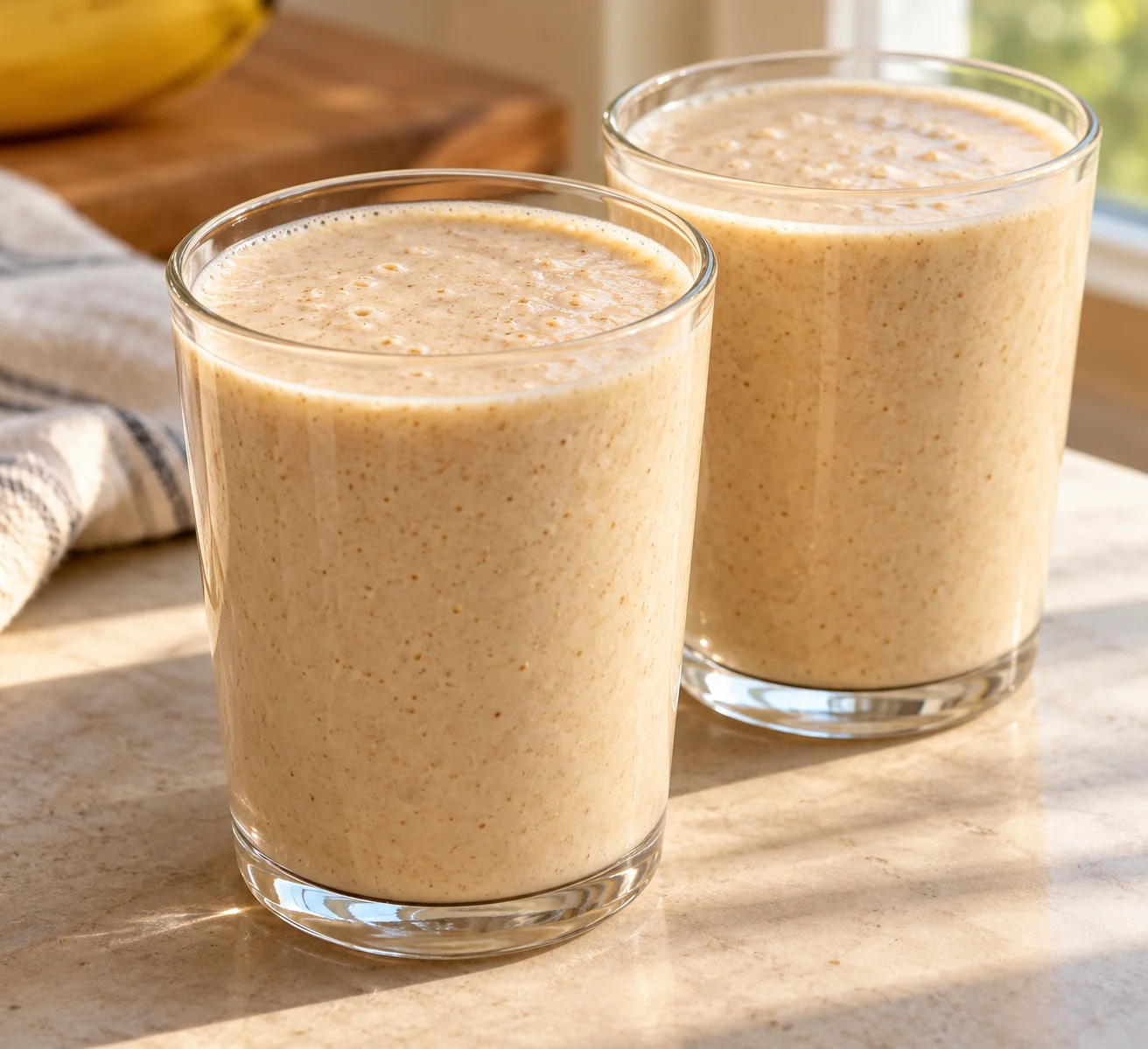
This smoothie uses cooked rolled oats rather than assuming every oat product is suitable for uncooked use. The oats are chilled before they meet the milk, yogurt and banana, giving a cold drink without ice or frozen-fruit preparation. Peanut butter adds flavor and body, while cinnamon is blended throughout rather than sprinkled on top. The complete batch is divided equally between two glasses. The long preparation allowance includes cooling the porridge; blending itself takes only a short time once all ingredients are cold.
Banana, peanut & oat breakfast smoothie makes 2 servings, with 1 hr 50 min estimated total time. View the standalone recipe page.
Cook the full measured oat batch
Use plain rolled oats with verified gluten-free labeling if that condition matters for your serving. Cook them with the measured water until soft, following any longer package requirement. Stir so the small batch does not stick to the bottom while the liquid thickens. Keep every part of the porridge rather than draining it. The nutrition estimate starts with the dry oat quantity, which is easier to reproduce than an unspecified scoop of cooked oatmeal. Steel-cut oats or raw oat flour are different products and do not share this short cooking method.
Cool in a shallow container instead of a deep pot
Immediately spread the cooked porridge into a clean shallow container and refrigerate promptly. A thin layer gives heat a shorter path to escape than a deep saucepan of oats. Keep it loosely covered until cold, then cover fully. The sixty-to-ninety-minute interval is an allowance, not a guarantee: check that the porridge reaches 40°F or below before blending. Do not leave it on the counter until it feels cool enough. A warm oat mixture would heat the dairy and produce a drink with the wrong serving temperature.
Weigh banana flesh and keep dairy cold
Peel the banana before weighing the edible portion. Its peel is not part of the ingredient amount. Chill the covered fruit while the porridge cools, and keep milk and yogurt refrigerated until blending. Ripe banana provides sweetness, but fruit ripeness and peanut-butter brands can change the flavor. This recipe does not add honey or syrup to correct those differences. It also makes no claim that all sugar is absent: the estimate includes sugars from the fruit, dairy and peanut butter. Use the stated plain yogurt rather than a sweetened flavored product.
Add liquid first and scrape only with the motor stopped
Pour cold milk into the blender before adding the thicker ingredients so the blades have liquid around them. Add the full porridge, yogurt, banana, peanut butter and cinnamon, then blend until smooth. If mixture clings to the walls, stop the motor completely before scraping. Do not push a spoon toward moving blades. A small amount of cold potable water can loosen an overly thick batch without adding nutrients. Extra milk, yogurt or peanut butter would change the ingredient-based estimate and should not be treated as a neutral adjustment.
Divide the complete drink and keep it refrigerated
Scrape the blender so both glasses receive their share of the oats and peanut butter rather than leaving a thick layer behind. Divide by weight if you want the most consistent two servings; the recipe does not claim an exact final volume because blending incorporates air. Serve immediately for the freshest texture. If reserved, keep it at 40°F or below and use within twenty-four hours. Separation during storage can be stirred or blended back in. No strained solids, decorative toppings or leftover ingredient portions are assumed in the calculation.
Common questions
Why does the smoothie get thicker after standing?
Cooked oats and the other ingredients continue to settle and redistribute moisture. Stir or briefly reblend before drinking. If necessary add a little cold water; adding extra dairy or nut butter changes the stated quantities.
Can I prepare the oats the night before?
Yes, cook and cool them promptly in the shallow container, then keep them covered in the refrigerator. Blend the next morning with cold ingredients. The overnight wait is additional planning time, not part of the same-day cooling estimate.
Technique & food-safety references
These primary references support the technique, safety and storage guidance. The recipe and cooking explanations are original Recipe Pinboard content.


