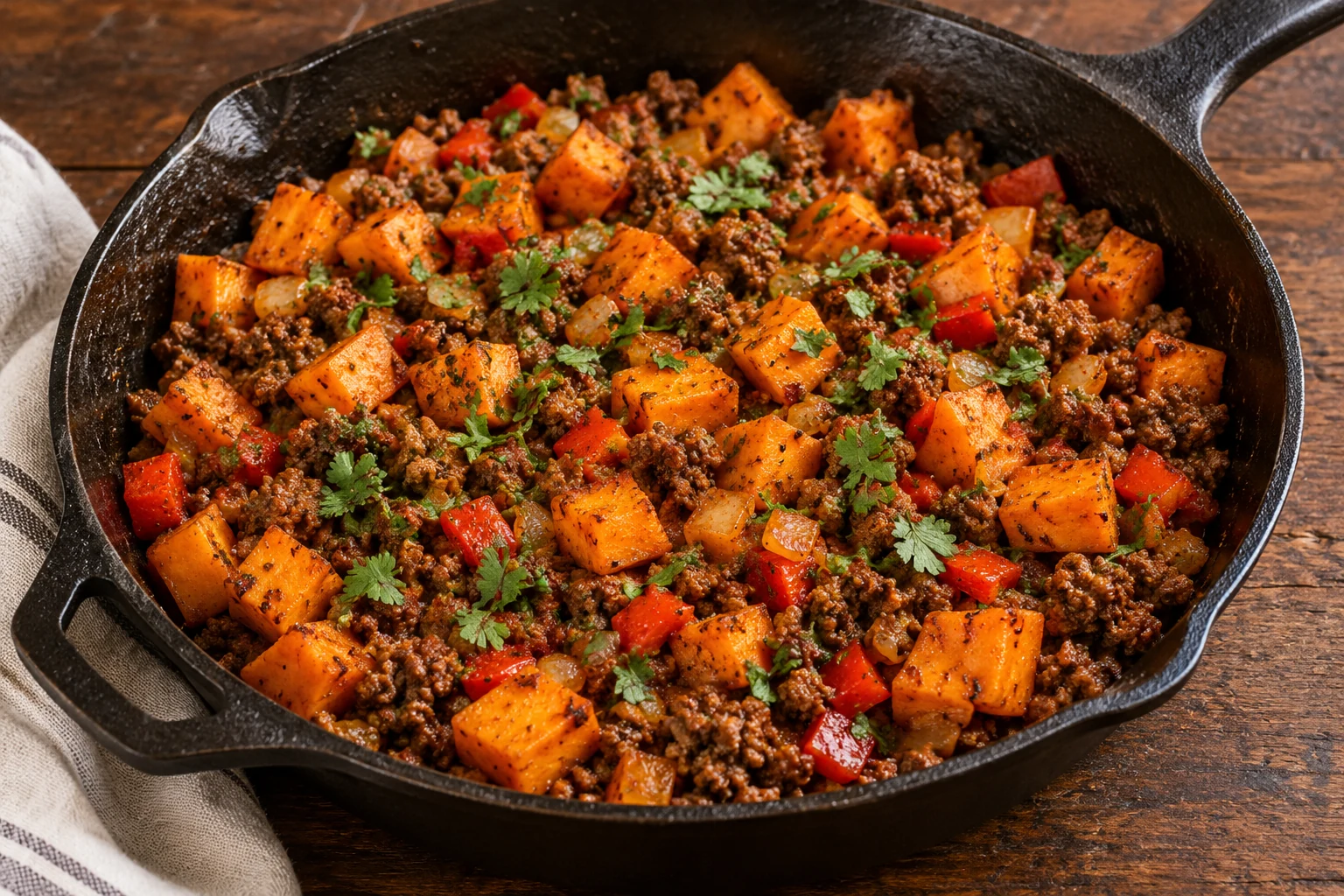
Sweet potatoes set the pace in this skillet. The ground beef is safely cooked before they enter, and a small quantity of water then steams the cubes under a lid. Success means stopping that covered stage when the potatoes are tender, before their edges collapse into the beef. The final uncovered minutes remove excess liquid.
Beef & sweet potato skillet makes 4 servings, with 35 min estimated total time. View the standalone recipe page.
Keep the potato cubes genuinely small
Peel the two medium sweet potatoes and cut them into half-inch cubes. Make flat slabs first, then strips, then cubes so the size stays consistent. A mix of small scraps and large chunks cannot finish evenly in the same twelve-to-fifteen-minute window. Set the cubes beside the measured water and spices before cooking.
Dice the onion and pepper into pieces that will distribute through the beef. These vegetables soften during their first five minutes and continue cooking later, so they need not be completely tender before the meat goes in. A deep skillet with a fitting lid is important for the covered stage.
Cook the beef before adding potatoes
After the vegetables start in olive oil over medium heat, add the 90%-lean ground beef and break apart compact clumps. Use the spatula to expose uncooked surfaces rather than repeatedly pressing all the meat flat. The recipe estimates about eight minutes, but the required endpoint is 160°F (71°C).
Check the beef with a thermometer, avoiding contact with the skillet. Carefully drain excess fat before adding the potatoes, keeping the cooked solids in the pan. Do this before the measured half cup of water enters; draining afterward would also remove the liquid needed for the potato-cooking stage.
Use the lid to finish the centers
Stir in the cubes, smoked paprika, cumin, salt and water, then cover over medium-low heat. The water is a working cooking liquid, not a sauce to preserve at all costs. Keep the bubbling gentle so it does not evaporate before the potatoes soften. Stir occasionally, redistributing cubes from the top and edges.
Test several larger cubes with a fork near the end of the suggested time. Their centers should yield without a hard core. If they remain firm, continue the covered stage and monitor the liquid. Raising the burner aggressively can scorch the beef underneath without solving an oversized potato cube.
Uncover only after the potatoes are tender
Remove the lid for the final two to three minutes once the potato centers are ready. Allow surplus liquid to evaporate, turning the mixture gently instead of chopping through it with the spatula. You want separate orange cubes among the crumbled beef, with no deep pool at the bottom.
Stop when the skillet looks moist and cohesive. Cooking until everything looks dry can leave the beef crumbly and make the soft potato edges stick. Add the chopped cilantro at the finish. The listed seasonings are smoked paprika and cumin; the card does not contain a separate chili ingredient.
Portion and reheat with the potato texture in mind
Spoon through the depth of the skillet when dividing the four servings so each receives both beef and sweet potato. A serving taken only from the top may contain mostly cubes, while the smaller meat crumbles settle beneath them. Handle the mixture with a broad spoon to preserve the softened edges.
Refrigerate leftovers promptly in shallow containers and use within three to four days. Reheat to 165°F, stirring gently so cold spots disappear without mashing the potatoes. A covered reheating stage limits drying, but check temperature rather than assuming the first visible steam means the entire portion is hot.
Common questions
Why are the potatoes still hard?
The cubes may be larger than half an inch, or the pan may have lost its cooking moisture too quickly. Test the largest centers and extend the covered cooking as needed.
Is this supposed to have crisp roasted potatoes?
No. The potatoes cook covered with water and beef, giving tender cubes rather than a roasted crust. The uncovered finish removes excess liquid instead of deeply browning every side.
Technique & food-safety references
These primary references support the technique, safety and storage guidance. The recipe and cooking explanations are original Recipe Pinboard content.