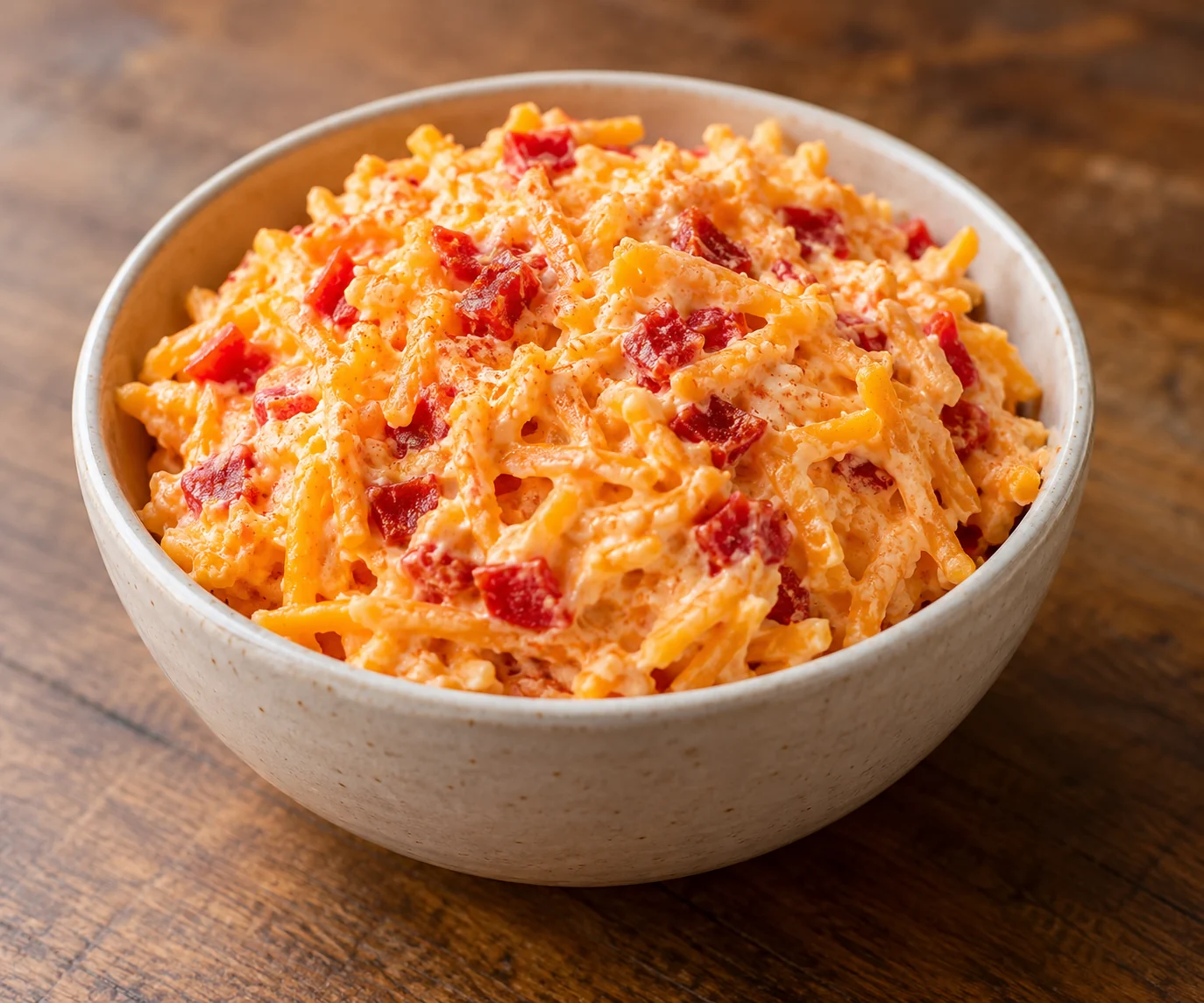
This is a cold pimento-style cheese spread built around visible cheddar shreds and small pieces of roasted red pepper. The peppers here are brine-packed roasted peppers rather than a promise of a particular traditional pimiento variety. Mayonnaise binds the mixture without turning it into a melted cheese dip. Most of the useful work happens before stirring: draining accurately, choosing the grater size, and balancing a firm cheese against a moist pepper.
Cheddar & roasted pepper pimento-style spread makes 8 servings, with 45 min estimated total time. View the standalone recipe page.
Weigh the edible peppers
Drain the packing liquid, pat the peppers dry and only then weigh the required amount. A weight taken straight from a dripping jar includes liquid that this formulation does not intend to add. Chop the peppers finely enough to distribute through every spoonful, but keep recognizable pieces. Avoid processing them into a puree, which releases more moisture into the mayonnaise. Brine-packed and oil-packed peppers are different ingredients; the nutrition record here specifically follows the drained brine-packed product.
Choose cheese texture deliberately
Grating a cold block of cheddar is easier than grating cheese that has become warm and flexible. Use the coarse face of a box grater for a textured spread. Very fine shreds make a more uniform paste and can disappear when mixed forcefully. Pre-shredded products may contain anti-caking ingredients and behave differently, so inspect their labels if using them. The vegetarian label also depends on the cheese enzymes, not simply on the fact that cheddar contains no visible meat.
Mix the binder before the shreds
Combining mayonnaise, lemon juice and the small measured pinch of cayenne first spreads the seasoning evenly. Fold in the cheese and peppers with a broad spatula, reaching underneath the mixture rather than beating it. The goal is a coated mound with separate shreds, not an airy whipped dip. There is no cooking or melting stage. More mayonnaise can make a softer spread, but it also changes the recipe and its estimate, so do not add it automatically to a cold, firm mixture.
Give the chill a purpose
The thirty-minute refrigerator rest lets the mixture become evenly cold and a little firmer. A quick stir after chilling redistributes any slight moisture collecting around the peppers. If the spread seems unusually wet, review whether the peppers were properly drained instead of trying to fix it with unmeasured extra cheese. Serve modest portions from the refrigerator and replenish as needed. This is particularly useful when the spread will sit beside warm dishes that could otherwise encourage it to soften excessively.
Portion and handle the finished spread
Eight portions means eight equal shares of this bowl, not eight sandwiches with unspecified amounts of bread. Crackers, toast and vegetable sticks are separate additions. Keep the main container refrigerated and use a clean utensil when serving. Commercial mayonnaise made with pasteurized eggs avoids introducing raw shell egg into this no-cook recipe, but the finished mixture still needs cold storage. Follow the stated time limits, including the shorter allowance in very hot weather, and use refrigerated leftovers within three to four days.
Common questions
Can I turn this into a smooth dip in a food processor?
You can create a different texture that way, but it is not the intended result here. Prolonged processing can warm the cheddar and break the pepper into wetter fragments. For this recipe, hand folding gives better control over the coarse, spoonable consistency.
Does pimento-style mean that any jarred pepper works?
No. Pickled hot peppers, oil-packed peppers and sweet roasted peppers have different moisture, acidity and nutrition. Use the specified drained roasted peppers. The name describes the cheese-and-pepper style rather than claiming every pepper product is interchangeable.
Technique & food-safety references
These primary references support the technique, safety and storage guidance. The recipe and cooking explanations are original Recipe Pinboard content.


