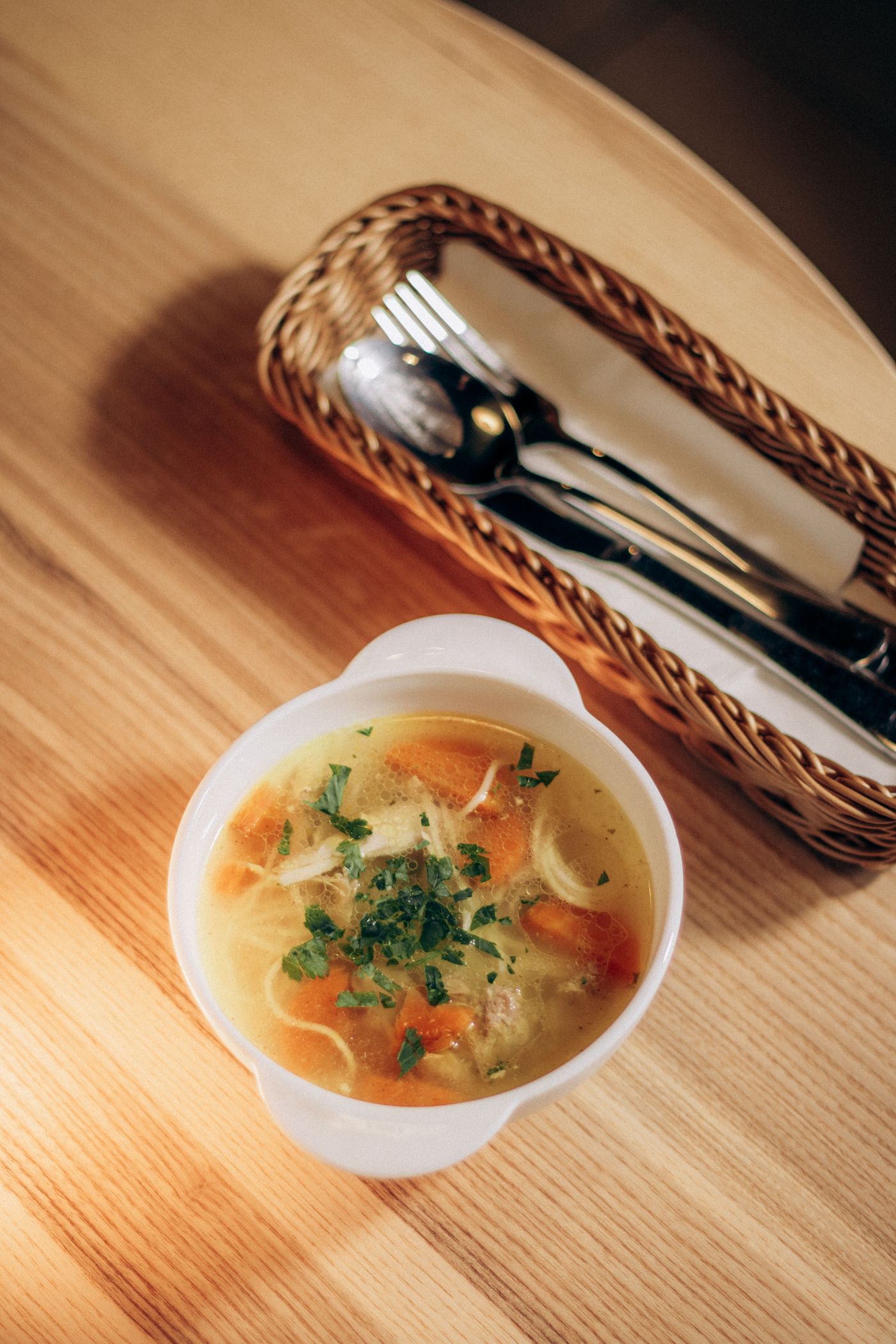
The chicken and noodles have different jobs and different cooking times in this soup. Whole breasts simmer in the broth, then leave the pot while the egg noodles cook. That separation gives more control than keeping everything boiling together. The recipe’s forty minutes is an estimate; thick breasts, broth heating and your noodle package can extend the total.
Cozy chicken noodle soup makes 6 servings, with 40 min estimated total time. View the standalone recipe page.
Build the vegetable base without rushing the cuts
The onion, three carrots and two celery stalks begin with seven minutes in olive oil over medium heat. Dice the onion evenly and make the carrot and celery slices similar in thickness. A few thick carrot coins may still be firm when the noodles are ready, while very thin slices can break down.
This first stage softens the vegetables before the broth enters; it is not intended to brown them deeply. Stir across the bottom so onion does not stick in one spot. Have the broth and seasonings measured, and use a pot large enough for eight cups of broth plus the chicken, vegetables and expanding noodles.
Simmer the whole breasts gently
Add the chicken breasts with the broth, thyme, salt and pepper, then bring the liquid to a gentle simmer. Look for modest bubbling rather than a rolling, splashing boil. The partially covered pot retains heat while allowing you to monitor the liquid and prevent an unnoticed vigorous boil.
Start checking during the fifteen-to-twenty-minute window, but use the thickest breast’s center to judge progress. Each breast needs to reach 165°F (74°C). Different-sized pieces can finish at different times; remove a finished piece to a clean plate rather than keeping it in the broth while a thicker one catches up.
Let the noodle package set the next timer
With the cooked chicken out, add the six ounces of dry egg noodles. Shapes and thicknesses differ, so use their package timing instead of assigning every noodle the same number of minutes. Stir after adding them to separate the pieces and ensure none remain stuck in a compact clump.
Check a noodle near the end of its suggested time. It should be tender with enough structure to survive the final warming. During this stage, shred the chicken into pieces that fit comfortably on a soup spoon. If it is too hot to handle, use two forks as written rather than waiting for it to cool completely.
Finish the broth after the noodles
Return the shredded chicken only after the noodles have cooked, then heat through and add parsley. This is a short reunion, not another long simmer. Extended boiling at this point softens the noodles further and gives the already-cooked breast meat more time to dry out.
The card allows a little water if the soup has become thicker than you prefer. Add it gradually, stir, and look at a ladleful containing both broth and solids. Noodles keep taking up liquid as they stand, so a soup that appears perfectly balanced immediately can be noticeably thicker by the second bowl.
Cool portions rather than the whole pot
For storage, divide the soup into shallow containers instead of leaving the large pot on the counter. Refrigerate within two hours, or one hour if the surrounding temperature exceeds 90°F, and use within three to four days. Keep some space in each container so you can stir without spilling during reheating.
Expect the stored noodles to be softer and the liquid less abundant than on the first day. A little water can loosen a reheated portion, as it does at the original finish. Reheat leftovers to 165°F and bring soup to a rolling boil, then serve rather than holding it at a boil for an extended period.
Common questions
Can the chicken stay in while the noodles cook?
Removing it gives better control over lean breast meat. The recipe deliberately finishes the chicken first, then returns it after the noodles so it avoids an unnecessary extra cooking stage.
Why did the soup become thick overnight?
The noodles continue absorbing broth. This changes texture even when storage is correct; loosen a portion gradually while reheating instead of assuming the entire batch needs a large amount of water.
Technique & food-safety references
These primary references support the technique, safety and storage guidance. The recipe and cooking explanations are original Recipe Pinboard content.