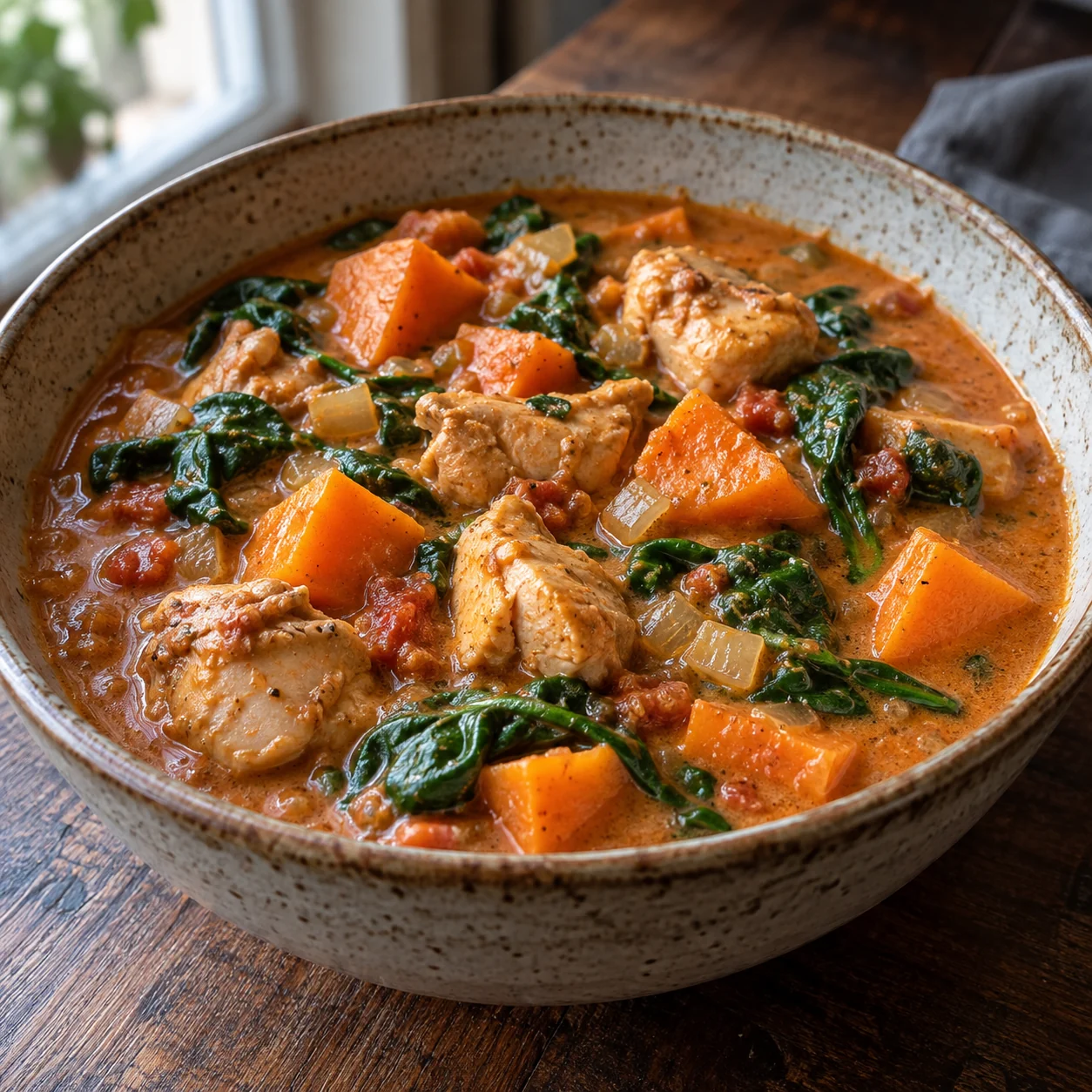
This stew combines chicken thigh, sweet potato and spinach in a tomato-peanut broth. The peanut butter goes in near the end so it can be dispersed smoothly without sitting against the hot pan throughout the simmer. Follow the complete card above for quantities and four equal portions. The useful checkpoints are cube size, a gentle simmer, a thermometer check and the final thickness.
Chicken, sweet potato & peanut stew makes 4 servings, with 1 hr 5 min estimated total time. View the standalone recipe page.
Prepare the vegetables before the chicken
Dice the onion, cube the peeled sweet potato and prepare the ginger and garlic before handling the raw chicken. Keep the vegetable cubes close to three-quarters of an inch so they cook predictably. Cut the chicken into roughly one-inch pieces on a separate board, then clean hands, utensils and surfaces. Do not rinse raw chicken; splashing can spread contamination. Similar chicken pieces make it easier to choose representative thick pieces for temperature checks later, although several pieces should still be checked.
Soften the onion before adding liquid
Warm the measured oil in a heavy saucepan with enough room for the finished stew. Stir the onion until it softens, then add ginger, garlic and cumin for their brief cooking stage. The aromatics should smell fragrant without turning dark. Stir in the chicken for three minutes, but do not mistake that short step for complete cooking. It begins the cooking process and distributes the aromatic base. The chicken finishes in the liquid, so keep moving directly into the simmer rather than setting partially cooked meat aside.
Simmer until both main ingredients are ready
Add tomatoes with their juice, water, salt and sweet potato. Bring the pot to a simmer, then reduce the heat and leave the lid partly open. Gentle bubbles keep the cubes moving without breaking them apart as quickly as a rolling boil. Stir from the bottom occasionally. Test a sweet potato cube with a knife and check the centers of several chicken pieces with a food thermometer; the chicken must reach 165°F (74°C). Color alone is not a reliable safety check, especially when tomato coats the meat.
Loosen the peanut butter in a separate bowl
Scoop a ladle of hot broth into a bowl containing the peanut butter and whisk until it is fluid. Pour that mixture back into the pot while stirring. This avoids dense lumps that can stick to the bottom and lets you see whether the peanut butter is fully incorporated. Do not add it as one solid mound and leave it to dissolve by itself. The broth will become thicker and more opaque. Keep the simmer gentle at this stage, scraping the base with a spoon to prevent catching.
Finish spinach and portion the whole pot
Fold in the washed spinach and allow it to wilt into the stew. Stir so any cool leaves are heated throughout. The finished broth should coat the ingredients while still being easy to ladle. If the pan became too dry during simmering, a small amount of water can restore movement; an added ingredient such as coconut milk would change the estimate. Divide chicken, vegetables and broth evenly among four bowls. Rice or bread is optional accompaniment and is not included in the nutrition panel.
Cool a thick stew promptly
For leftovers, transfer the stew into shallow containers and refrigerate within two hours rather than leaving the heavy pot on the counter to cool fully. Use within three to four days. Reheat to 165°F (74°C), stirring and checking more than one spot because a thick peanut broth can heat unevenly. Brand differences matter: peanut butter may contain sugar, salt or added fat, while flavored tomato products can add other ingredients. The gluten-free and dairy-free tags require appropriate labels and never establish peanut-allergy safety.
Common questions
Why is the sweet potato breaking apart?
The cubes may be smaller than specified, or the stew may have boiled hard for too long. Cut more evenly next time and reduce the heat once simmering. A few softened edges can thicken the broth pleasantly, but vigorous stirring after the cubes are tender breaks them further.
Can I judge the chicken by the simmer time?
Use the time as a guide for when to start checking, not as a substitute for measurement. Initial meat temperature, piece size and stove output vary. Check several thick pieces with a thermometer and keep cooking if any have not reached the stated temperature.
Technique & food-safety references
These primary references support the technique, safety and storage guidance. The recipe and cooking explanations are original Recipe Pinboard content.


