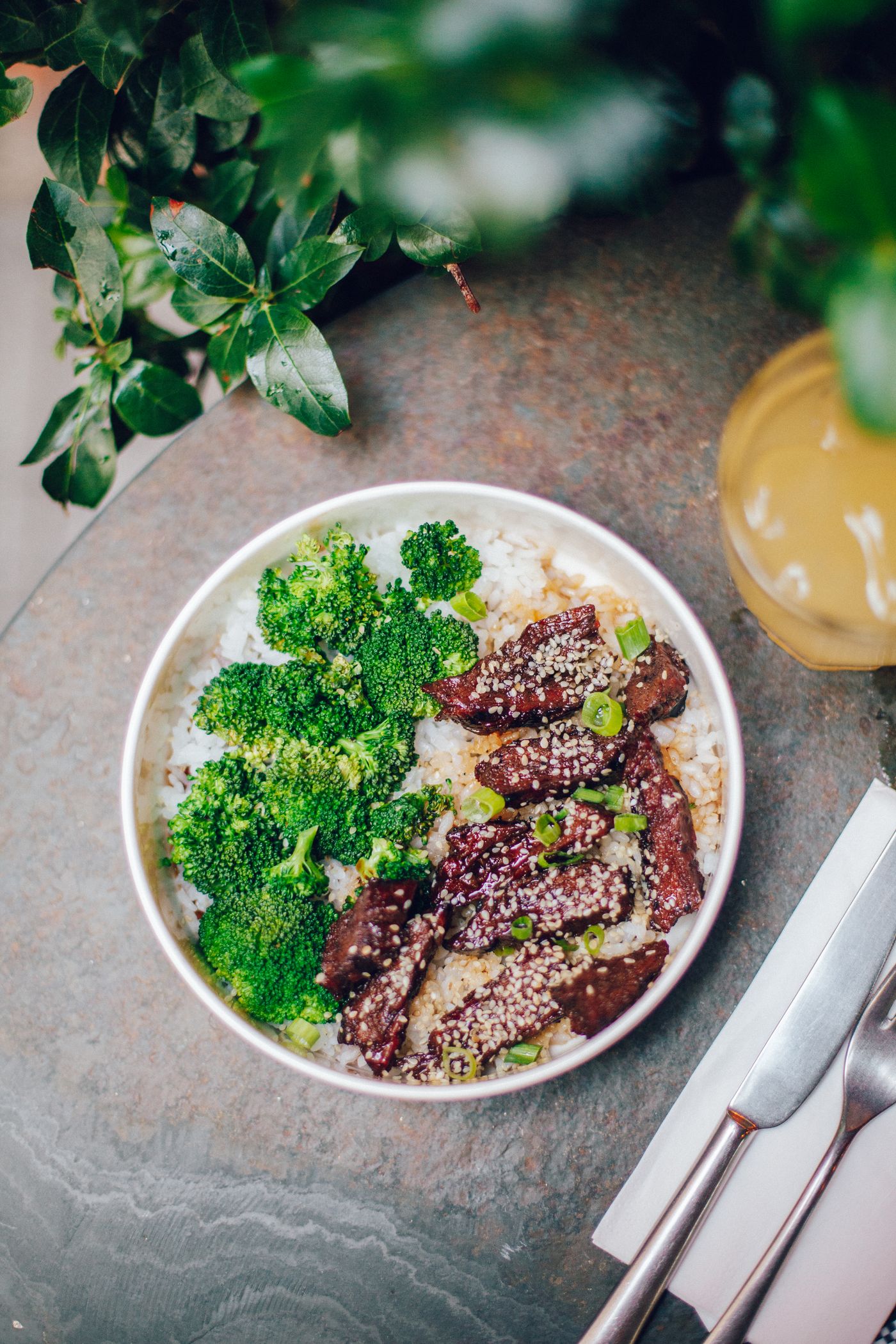
This beef-and-broccoli skillet has several short stages, so preparing the sauce and the rice before searing matters. The recipe uses lean top sirloin, not ground beef or stew meat. Its texture comes from thin across-the-grain slices and a brief final toss, while a measured cornstarch mixture supplies the glossy coating.
Ginger beef & broccoli makes 4 servings, with 30 min estimated total time. View the standalone recipe page.
Read the grain before slicing
Look for the direction of the visible muscle fibers in the trimmed steak. Cut across those lines so each finished strip contains shorter fibers rather than long strands running end to end. Keep the slices thin and similar in thickness; uneven pieces are difficult to cook together without overdoing the smallest ones.
Prepare the grated ginger, minced garlic, sesame seeds and scallions before heating the skillet. Have the four cups of cooked rice hot and ready as well. The stated thirty-minute plan assumes cooked rice is available; starting a separate pot of rice adds a task that needs to overlap the skillet work.
Give broccoli its own steam stage
Cut the four cups of florets into reasonably consistent sizes, especially through thick stem sections. Add them to the first tablespoon of oil with the two tablespoons water specified in the method, cover, and steam for three to four minutes. That steaming water is separate from the half cup used in the sauce.
Transfer the broccoli to a bowl while it still has some bite. It will return to the skillet later, so there is little advantage in making it very soft now. Let any remaining water evaporate from the empty pan before searing beef; otherwise the first batch meets steam instead of a hot cooking surface.
Cook batches and respect the rest
Heat the remaining oil over medium-high heat and spread a manageable batch of beef across the pan. Overlapping strips release moisture into one another and are harder to turn evenly. Transfer finished batches to a clean plate while cooking the rest, allowing more time if the skillet is small.
Follow the card’s 145°F (63°C) endpoint and at least three-minute rest for the steak. A thin-tip thermometer helps check thin pieces without measuring the pan. Track the last batch’s rest separately; preparing the sauce does not automatically guarantee that every batch has rested for the full required interval.
Rewhisk the cornstarch mixture
Whisk reduced-sodium soy sauce, water, cornstarch and brown sugar before cooking, then whisk again immediately before pouring. Cornstarch can settle while the broccoli and beef cook, leaving a dense layer at the bottom of the bowl. Redistributing that layer is more reliable than trying to dissolve lumps in a hot skillet.
Lower the heat for the thirty-second ginger-and-garlic stage. Add the rewhisked liquid and simmer for one to two minutes, stirring across the bottom, until it changes from watery to coating consistency. The sauce should spread through the beef and broccoli; it should not become a stiff paste before they return.
Finish briefly and handle leftovers separately
Return the rested beef and broccoli and toss only long enough to coat and heat through. Divide over the prepared rice, then add the sesame seeds and scallions. If the broccoli already bends easily, avoid prolonged stirring that breaks the florets into the sauce.
Refrigerate leftovers promptly in shallow containers, with rice beside rather than buried under a dense mound of beef. Use within three to four days and reheat to 165°F. The coating will thicken as it cools; stir carefully during reheating so the softened broccoli is not crushed while the center is still cold.
Common questions
Why is the beef chewy?
Check whether it was sliced across the grain and whether the strips were uniformly thin. Long fibers and extra time simmering in the finished sauce can both work against a tender result.
Why are there pale lumps in the sauce?
The cornstarch may have settled before pouring. Whisk the entire mixture again, including the bottom of the bowl, immediately before adding it to the skillet.
Technique & food-safety references
These primary references support the technique, safety and storage guidance. The recipe and cooking explanations are original Recipe Pinboard content.