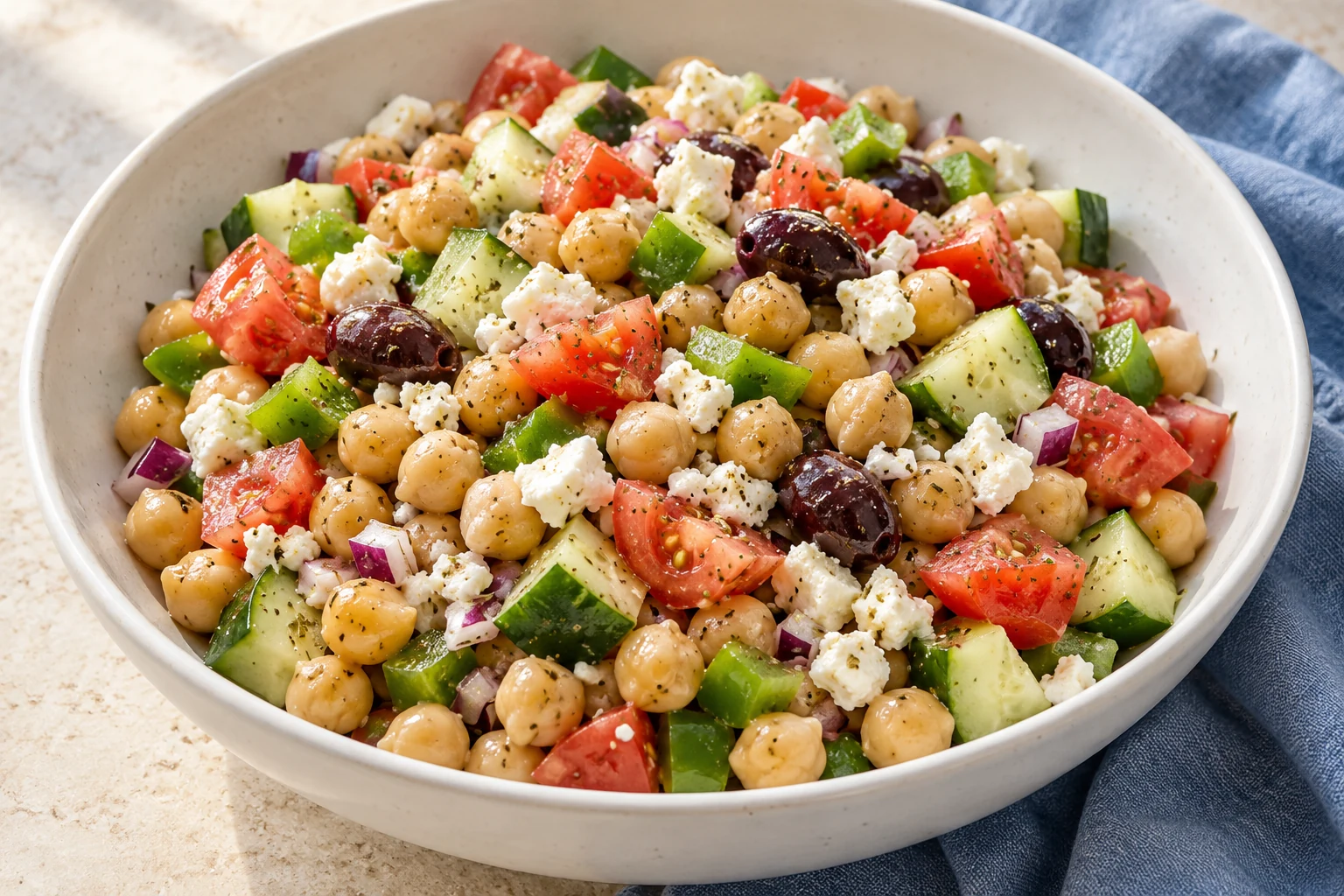
This chopped salad is built around chickpeas and crisp vegetables rather than leafy greens. Lemon and oregano flavor the dressing, while feta and olives supply much of the salt. Since the ingredients stay raw or ready-cooked, knife work and gentle mixing do more for the result than any complicated preparation.
Crunchy Greek-style chickpea salad makes 4 servings, with 15 min estimated total time. View the standalone recipe page.
Drain well and choose a useful dice
Drain and rinse the canned chickpeas, then give them time to shed the rinse water. A bowl of wet chickpeas dilutes the measured dressing before you have begun. The beans are already cooked, so there is no boiling stage to fit into this fifteen-minute recipe.
Dice the cucumber, tomatoes and bell pepper into pieces that can share a forkful with the chickpeas. The quarter red onion should be finer than the other vegetables so its flavor is distributed. Large raw-onion chunks can overpower a bite, even when the total amount in the bowl is correct.
Dry the vegetables after washing
Wash produce under running water before cutting and dry the surfaces with a clean towel. Keep the prepared ingredients away from raw meat or seafood and their utensils. This is particularly important for a no-cook salad because there is no later heating stage to address contamination from preparation surfaces.
Use a bowl with enough room to lift the mixture, not merely enough room to contain it. A tightly packed bowl makes thorough dressing difficult: the bottom can be coated while the top remains plain, and vigorous stirring to compensate can damage ripe tomato pieces.
Make the lemon-oregano dressing before adding solids
Whisk the three tablespoons olive oil with two tablespoons lemon juice, dried oregano and black pepper in the large bowl. Oregano should be dispersed through the liquid rather than left as a dry patch on the first spoonful of vegetables. If the dressing waits and separates, whisk again before continuing.
Add the chickpeas, cucumber, tomatoes, pepper, onion and pitted olives. Lift from the bottom and turn the vegetables through the dressing until the bowl is evenly coated. Stop short of crushing the tomatoes: their juices will already mingle with the dressing naturally as the salad stands.
Fold feta in last and taste a complete bite
Use the vegetarian-rennet feta specified in the ingredients if maintaining the recipe’s vegetarian requirement. Crumble it into manageable pieces and fold it through after the other ingredients are dressed. Putting it in at the first vigorous toss can turn the cheese into a coating instead of leaving distinct salty pieces.
Taste a forkful containing feta and olive as well as vegetables before considering extra salt. The recipe deliberately provides no measured salt addition. A spoonful of cucumber alone cannot tell you how salty the full dish will be, and feta brands can differ noticeably.
Serve for crunch or pack with realistic expectations
Serve at once for the crispest combination, or cover and refrigerate until needed. For advance preparation, keeping the dressing and feta separate until closer to serving gives you more control over texture. The original method permits refrigeration, but it does not mean a dressed tomato-and-cucumber salad stays unchanged for days.
Keep leftovers at 40°F (4°C) or below and use within three to four days; the vegetables may soften sooner. Fold gently before serving because some dressing and vegetable juice will settle at the bottom. When carrying the salad for lunch, keep it chilled with a cold pack rather than leaving it at room temperature.
Common questions
Why did the salad release liquid?
Cut tomatoes and cucumber release juice as they sit, particularly once dressed. Draining the chickpeas and drying produce removes avoidable extra water, but some change during storage is normal.
Why is there no salt in the dressing list?
The feta and olives already contribute salt. The method calls for tasting after adding them, so any decision about salt reflects the whole salad rather than the dressing alone.
Technique & food-safety references
These primary references support the technique, safety and storage guidance. The recipe and cooking explanations are original Recipe Pinboard content.