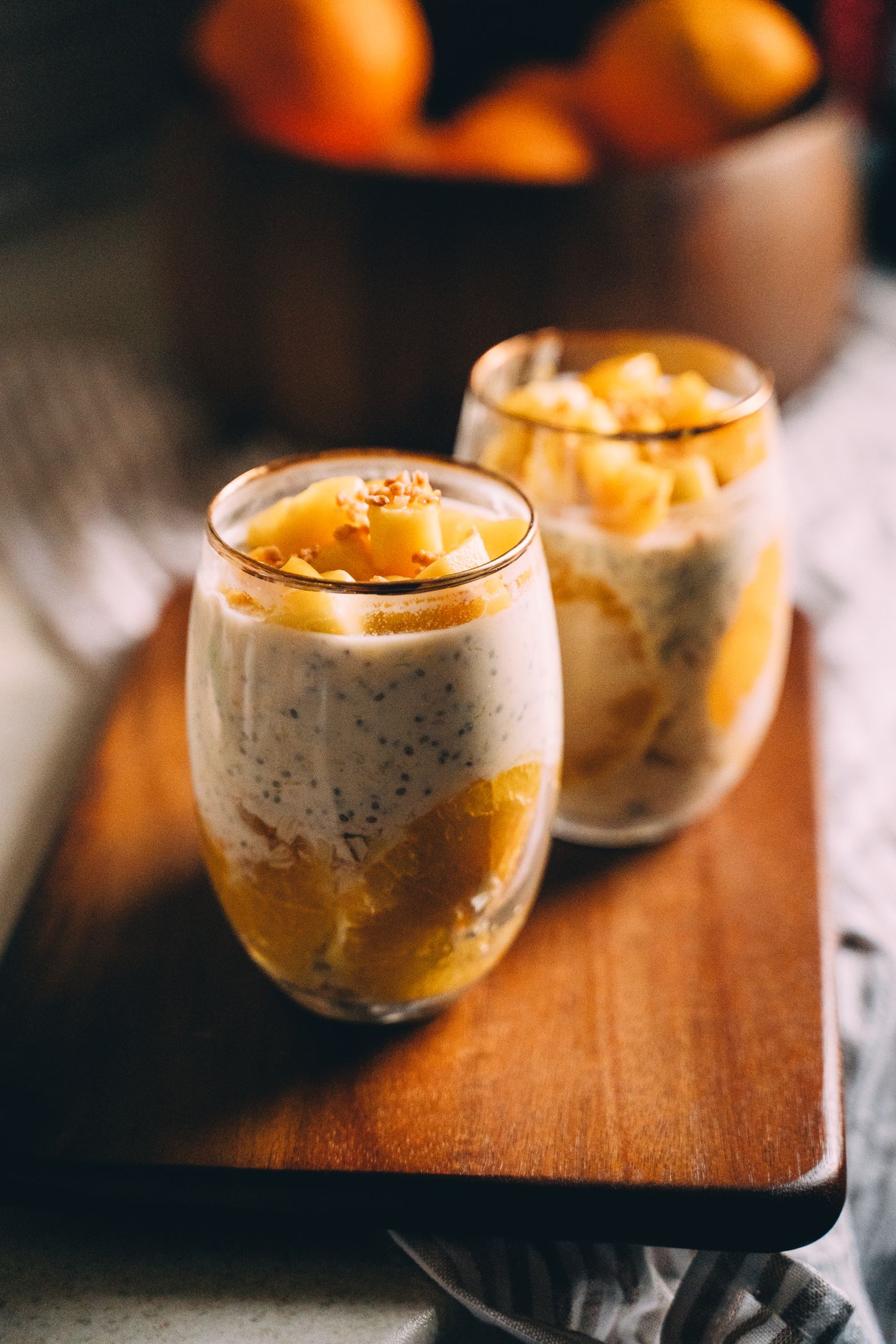
Mango-orange chia pudding needs little cooking equipment, but it does need an unhurried chill. This recipe makes four glasses from 80 g chia seeds and 500 ml milk or unsweetened soy milk, with mango purée underneath and diced fruit on top. The listed 255 minutes includes at least four hours in the refrigerator; active preparation is about 15 minutes. The useful work is distributing the seeds before they start to thicken.
Mango-orange chia pudding makes 4 servings, with 4 hr 15 min estimated total time. View the standalone recipe page.
Measure the pudding separately from the fruit
Set out a mixing bowl, whisk, blender and four serving glasses. Measure the chia seeds rather than estimating a handful: their proportion to the liquid determines whether the finished pudding is spoonable. Mix the 500 ml milk with the 2 tbsp maple syrup and 1 tsp vanilla so sweetness is distributed before the mixture thickens.
Choose either of the listed milks for the first batch. Sweetened or strongly flavored milk would change the intended balance with the mango and syrup. Keep the 100 ml orange juice for the fruit layer rather than pouring it into the chia bowl. The two mixtures have different jobs and will be assembled only after the pudding has set.
Whisk twice, including the bottom of the bowl
Whisk in all 80 g chia seeds, moving through the entire bowl so no dry pile sits at the bottom. Leave the mixture for the recipe’s 10-minute rest, then whisk again. This second pass is the best opportunity to separate little clusters before they become dense lumps surrounded by looser pudding.
Look for evenly dispersed speckles instead of a raft of seeds on top or a compact layer underneath. Scrape around the bowl’s lower edge as you whisk. Cover and move it to the refrigerator for at least four hours or overnight. A brief countertop rest helps you catch clumps; it does not replace the long refrigerated hydration stage.
Make a pourable mango-orange layer
Wash the whole mango before cutting, even though the peel is discarded. Measure 400 g edible flesh after removing skin and stone. Set aside 100 g for the diced topping and blend the other 300 g with the orange juice until smooth. Ripe, yielding mango makes a smoother purée than hard fruit that resists the blender blades.
Pause the machine and scrape its sides if pieces remain above the blades. Keep the existing liquid amount rather than adding more juice automatically. A fruit layer that is too thin will mingle with the pudding more easily. Cut the reserved mango into small, spoon-friendly pieces, then refrigerate the fruit components if the pudding is not ready.
Layer gently and diagnose the texture
After chilling, stir the chia pudding gently and check its consistency. It should mound softly on a spoon while still being easy to portion. Divide the purée among four glasses, then lower spoonfuls of pudding onto it close to the surface. Dropping pudding from a height can push through the mango and blur the layers.
A few visible seeds are part of this dessert, not a mixing fault. Dry-centered clumps, however, indicate uneven initial hydration: break them apart and give the mixture more refrigerated time. Do not judge a freshly mixed bowl as too runny and immediately add extra seeds. The recipe’s planned thickness depends on the full chilling interval, not the first few minutes.
Finish cold and plan ahead sensibly
Divide the diced mango across the glasses shortly before serving. If preparing breakfast the night before, you can keep the pudding and fruit in separate covered containers and assemble in the morning. That makes it easier to stir the pudding and retain a clean layer of bright fruit at the bottom.
Keep the prepared dessert at 40°F (4°C) or below. Return it to the refrigerator promptly and do not leave it out beyond two hours, or one hour in temperatures above 90°F. For quality, plan to eat the assembled glasses the next day and follow any shorter milk-package limit. Chilling firms the pudding; it does not make aging fruit or milk fresh again.
Common questions
Can I use soy milk in this chia pudding?
Yes. Unsweetened soy milk is already an option in the recipe, using the same 500 ml. Keep the maple syrup, seeds and fruit amounts unchanged for that version. Other plant drinks vary in flavor and body, so this guide does not promise identical results with every milk substitute.
Why are my chia layers mixing together?
The pudding may need more chilling, or the fruit layer may have been disturbed during assembly. Let the pudding finish setting, then spoon it gently onto the purée. Mixed layers are a presentation issue if everything was handled safely; the flavor combination still works.
Technique & food-safety references
These primary references support the technique, safety and storage guidance. The recipe and cooking explanations are original Recipe Pinboard content.