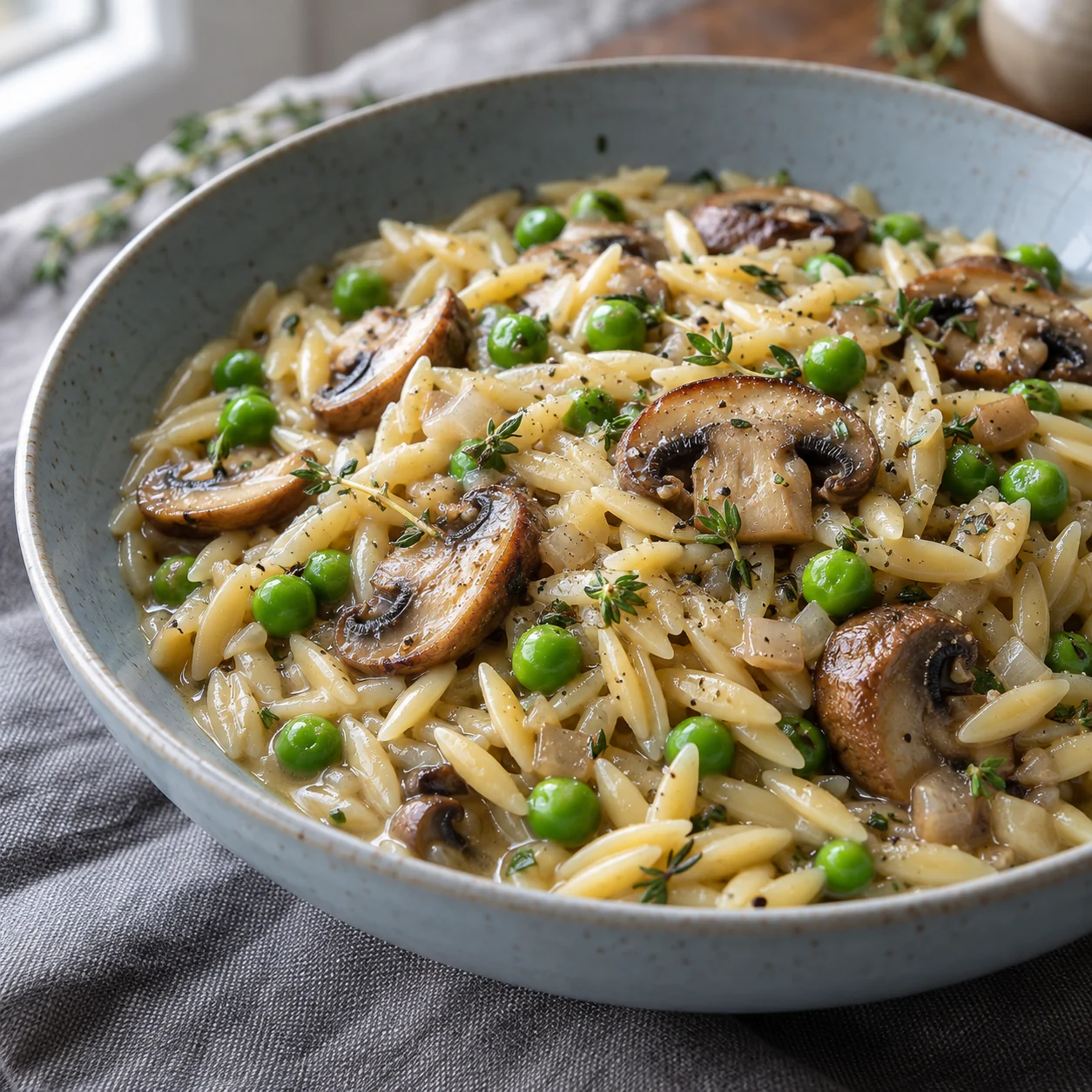
Orzo looks like a grain but is small wheat pasta. In this recipe it cooks in a measured amount of water, leaving its starch in the pan to create a light sauce without cream. Mushrooms, peas and thyme provide the flavor and texture. Use the complete card above for the formula, then watch the transition from browned mushrooms to simmering pasta: that change in heat and moisture is what makes this method work.
Mushroom & pea one-pot orzo makes 4 servings, with 45 min estimated total time. View the standalone recipe page.
Slice the mushrooms evenly and let moisture escape
Trim the cremini mushrooms and cut them into slices of similar thickness. The first cooking stage needs a wide pan and medium-high heat so released water can evaporate. Let the slices sit briefly between stirs instead of moving them continuously. They may look watery before they begin to brown; keep cooking until the liquid subsides and the edges acquire color. Do not add the measured cooking water at this point, because it would stop the browning stage before the mushrooms develop their roasted flavor.
Lower the heat for the onion and garlic
Once the mushrooms are browned, reduce the heat before adding the remaining oil and onion. Small onion pieces need time to soften without picking up burnt edges. Garlic and thyme go in later because their small particles cook quickly. Stir the dry orzo through this mixture for only the stated minute. The aim is to distribute the pasta and seasonings through the pan, not to turn every pasta piece deeply brown. Scrape the bottom as you stir so nothing remains stuck in one hot spot.
Treat the water amount as a monitored starting point
Add the measured water and bring the mixture to a steady simmer. A very wide pan loses water faster than a narrow saucepan, and different brands of orzo absorb at different rates. Keep the original amount as the starting point, then add the small water increments in the card only if the bottom becomes dry before the pasta is tender. Stir across the full base frequently, especially at the corners, because tiny pasta pieces settle and can stick together below the surface.
Add peas late and test the actual pasta
Frozen peas enter after the orzo has already cooked for several minutes. This allows them to heat through without spending the entire cooking period in the pan. Taste a pasta piece after it has cooled enough to handle: it should have no hard, chalky center. Do not drain the pot, since the liquid is the sauce. If the pasta is ready but the mixture is very loose, simmer briefly while stirring. Stop before it looks dry, because the sauce continues to thicken as it rests.
Finish with lemon and serve while the sauce moves
Stir the lemon juice in off heat, then give the orzo its short rest. It should settle softly into a bowl rather than stand in a rigid mound. Divide the complete mixture into four equal servings, distributing mushrooms and peas as well as pasta. Check the orzo label for egg or milk ingredients when following the vegan or dairy-free tags; the formula assumes plain wheat pasta. Refrigerate leftovers in shallow containers within two hours and reheat to 165°F (74°C), adding a little water to loosen the starch.
Common questions
Is this risotto made with rice?
No. The small pointed pieces are orzo pasta made from wheat. This method borrows the idea of retaining cooking liquid, but rice and orzo are not interchangeable in timing, water absorption, gluten content or nutrition.
Why did the leftovers become one solid mass?
The retained starch thickens as the pasta cools and absorbs more liquid. Break it up gently during reheating with a small splash of water. Adding cream or extra oil is optional recipe development and changes the estimated nutrition; it is not necessary to restore movement.
Technique & food-safety references
These primary references support the technique, safety and storage guidance. The recipe and cooking explanations are original Recipe Pinboard content.


