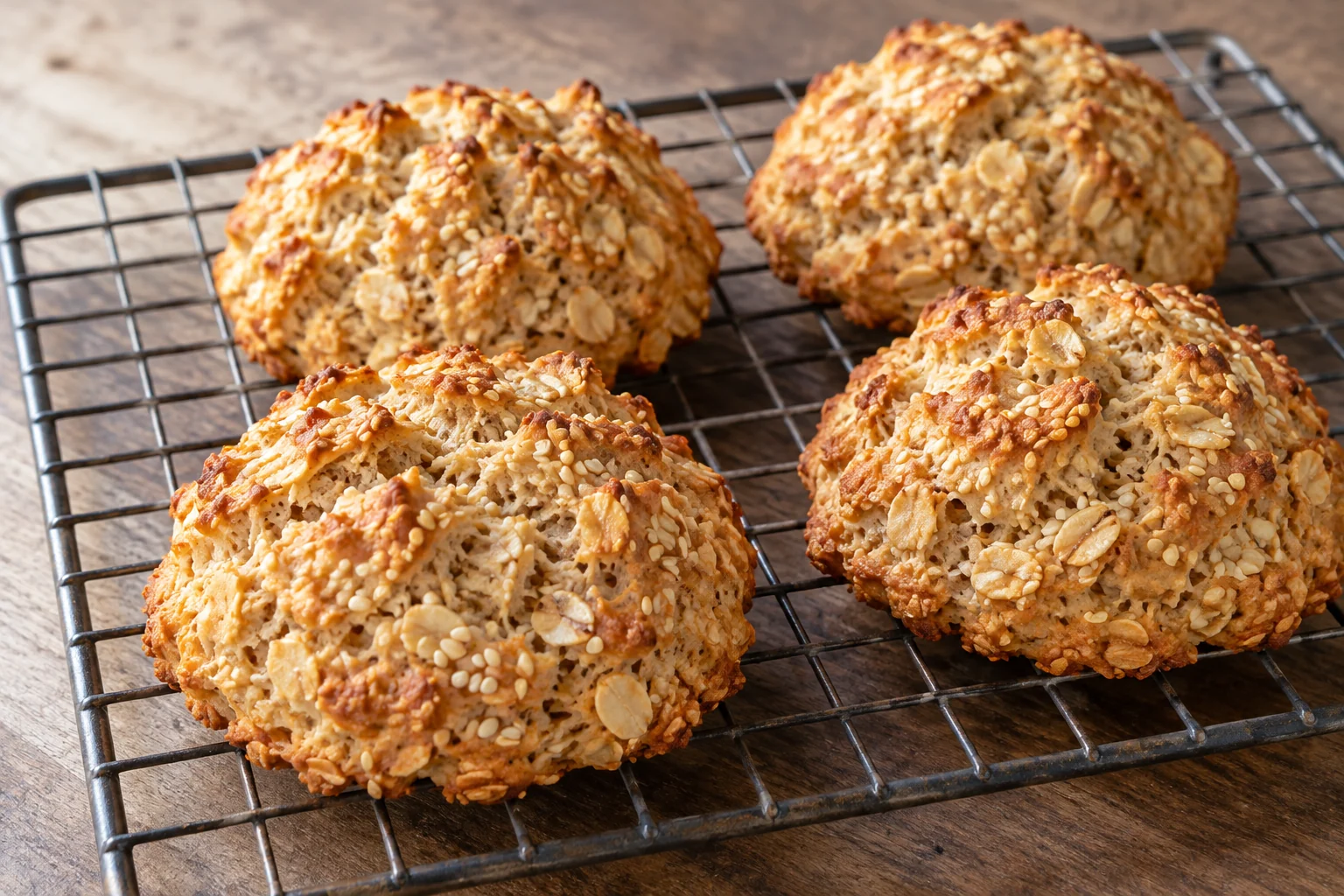
These biscuits are deliberately dropped from a spoon rather than rolled and cut. Oats and sesame add visible texture to a rough golden crust, while small cold butter pieces keep the crumb from becoming uniform and heavy. The goal is an evenly baked mound with a tender center, not the tall laminated layers of a folded biscuit.
Oat & sesame drop biscuits makes 8 servings, with 55 min estimated total time. View the standalone recipe page.
Measure the dry ingredients before mixing
Weigh flour and rolled oats separately. Oats are only part of the dry mixture, so replacing all the flour with oats would remove the structure this formula expects. Stir the baking powder and salt through the flour before adding the sesame; an isolated pocket of leavener can taste unpleasant. Use baking powder as written, not baking soda. Baking soda would require a different acid balance, and ordinary whole milk is not a direct replacement for buttermilk in a soda-based formula.
Keep some butter pieces visible
Cut cold butter into small cubes and rub it into the dry ingredients with fingertips or a pastry cutter. Stop when most pieces resemble coarse crumbs and a few are about pea size. The mixture should still look dry and loose. If the butter turns greasy and smears into a paste, the room or your hands may be too warm; a brief pause in the refrigerator is better than adding extra flour. The specified butter is unsalted, leaving the recipe salt as the measured seasoning.
Give rolled oats a short hydration pause
Pour in the cold milk and fold gently with a sturdy spoon until the last flour patches disappear. Let the dough stand for five minutes. Rolled oats absorb some moisture during that pause, making the mixture easier to scoop. It remains sticky: a dough that can be kneaded cleanly on the counter is too dry for this drop method. Steel-cut oats are not a suitable direct swap because they will not soften on the same schedule.
Make eight similar mounds
Use two spoons to divide all the dough into eight portions, or weigh the full mixture and divide by eight. Keep the mounds similar in height so the centers finish together. Leave space between them for heat to reach the sides. The tops naturally have rough peaks that brown sooner than the center. Check the underside and break open one biscuit if necessary: a damp, floury paste means it needs more time, while a moist but set crumb is the intended result.
Cool on a rack and plan starter changes separately
Move the biscuits to a rack after baking so steam does not collect underneath. Ten minutes of cooling helps the crumb settle before splitting. Serve one per portion without assuming an extra butter topping is included in the nutrition. Sourdough starter is not an invisible flavor addition: it brings both flour and water, and its acidity affects leavening. A discard version needs a separate formula that accounts for starter hydration and freshness. Keep this baking-powder recipe unchanged when following its measurements.
Common questions
Why did the biscuits spread flat?
Butter may have softened too far, the mounds may have been very shallow or extra milk may have been added before the oats hydrated. Begin with cold ingredients and make compact, similarly sized mounds after the short rest.
Can I make them the night before?
For the most predictable rise, bake soon after mixing. Finished cooled biscuits can be stored airtight for one day or frozen and reheated. Holding mixed dough overnight changes hydration and leavener performance.
Technique & food-safety references
These primary references support the technique, safety and storage guidance. The recipe and cooking explanations are original Recipe Pinboard content.


