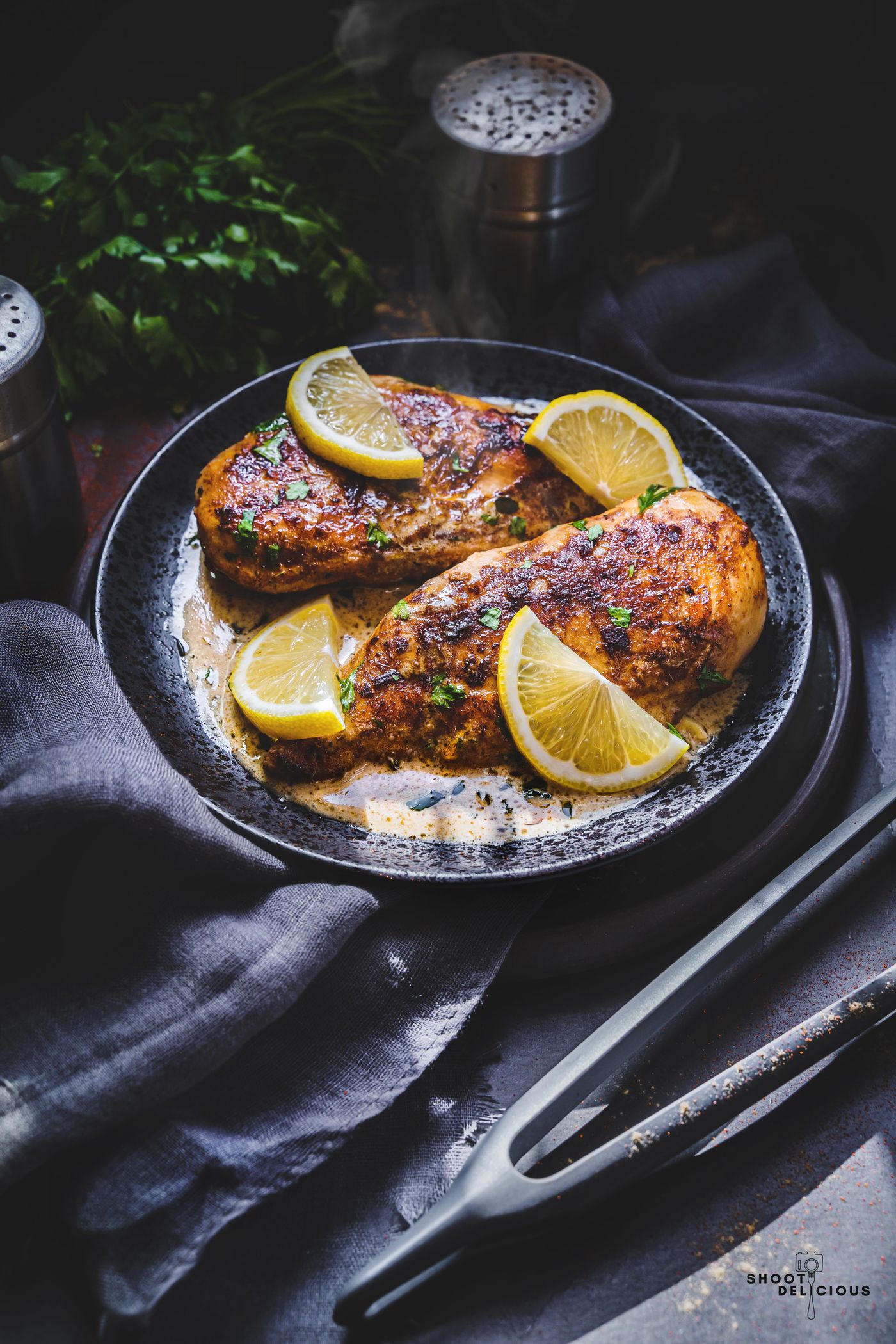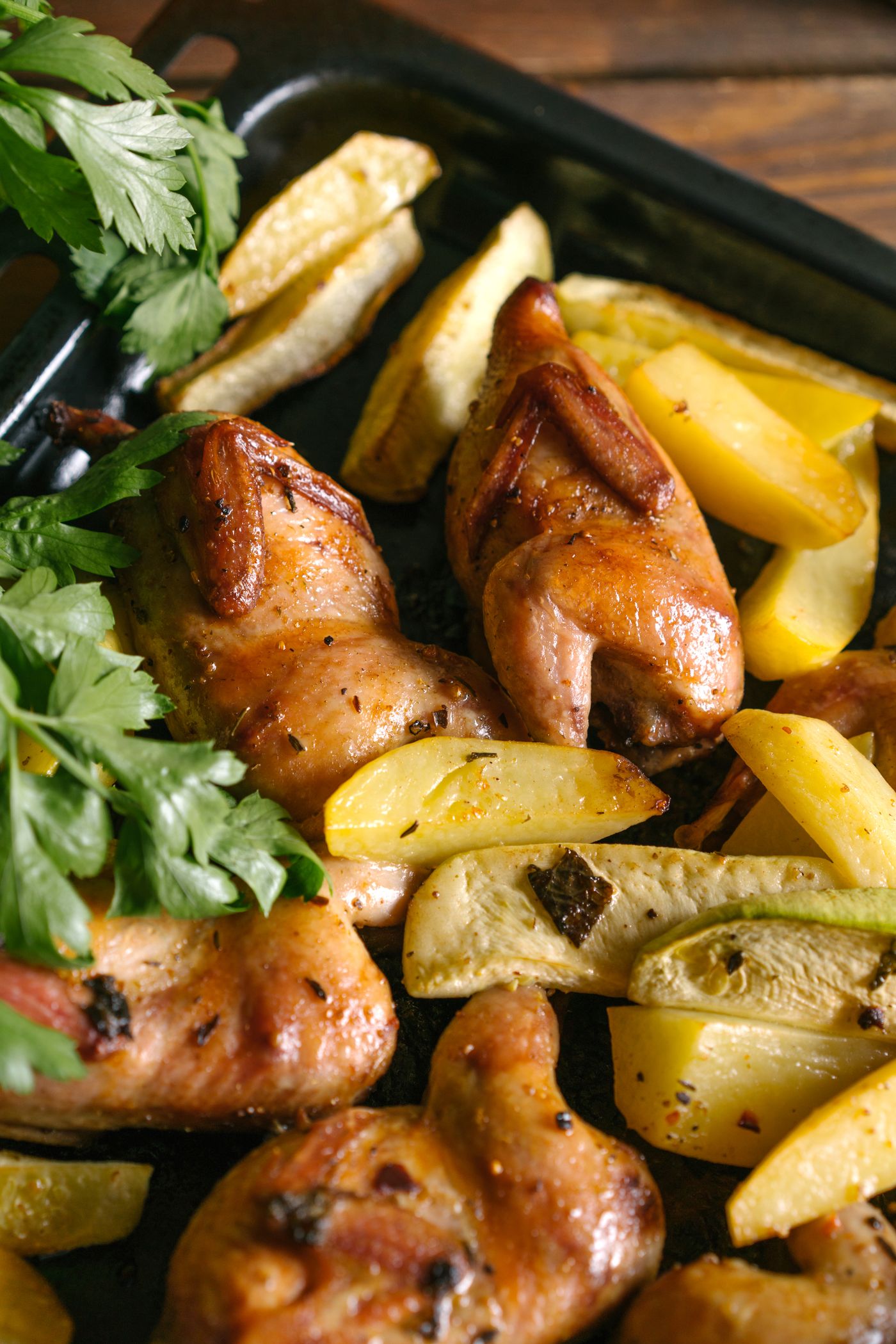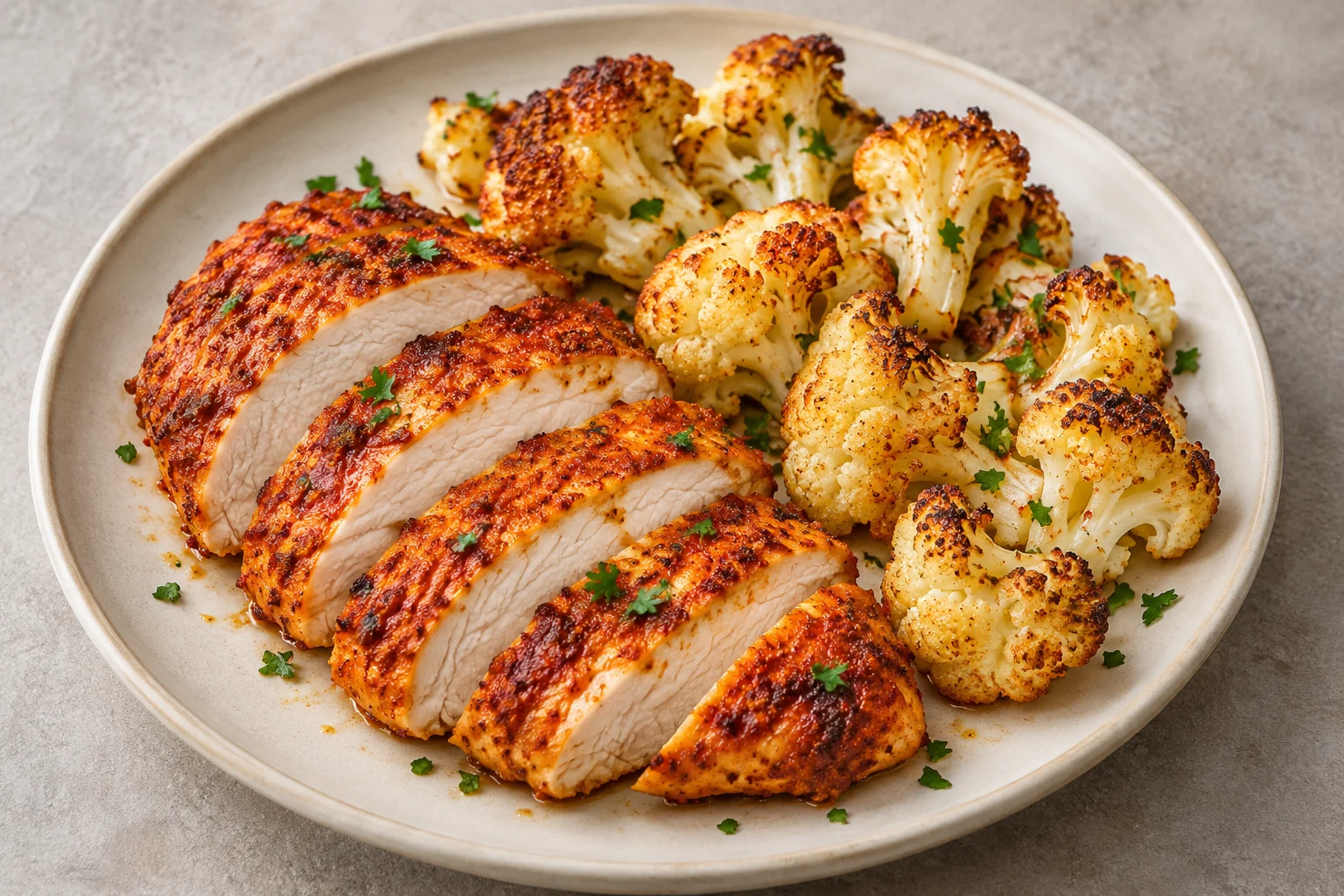
Two trays make this dinner easier to control than one crowded sheet. Cauliflower needs room to brown and a short head start, while the chicken benefits from an even thickness and a thin yogurt coating. The red paprika surface is a visual finish, so use a thermometer rather than its color to decide that every portion is cooked.
Paprika-yogurt chicken with roasted cauliflower makes 4 servings, with 55 min estimated total time. View the standalone recipe page.
Preheat the oven and start with dry cauliflower
Heat the oven to 425°F (220°C) with racks in the upper and lower thirds. Line two rimmed sheets with parchment rated for that temperature. Pat the trimmed cauliflower dry, then toss its 800 g of florets with 16 g olive oil and 2 g salt. Leave visible space around them instead of making a deep pile.
Put the cauliflower on the upper rack for ten minutes before adding the chicken tray. That head start is part of the recipe’s timing. If both trays begin together, the chicken may finish while the cauliflower stems remain firm. Keep the second sheet ready so the chicken can go in without reorganizing hot cookware.
Make four similarly thick chicken portions
The chicken is divided into four equal 170 g portions before cooking. Gently pound each thick end between sheets of parchment until the portion is an even 2 cm thick. Weight alone does not make pieces cook equally: a narrow thick lump heats differently from a broad, evenly flattened piece of the same mass.
Do not wash raw chicken. After handling it, wash hands and clean the board and utensils before touching ready-to-eat parsley. Keep the four portions separate on their baking sheet rather than folding one over itself to make room. Overlap creates a thicker area that no longer follows the intended cooking window.
Mix the coating without adding a marinating stage
Combine the 100 g plain unsweetened whole-milk Greek yogurt with the remaining 8 g oil, lemon juice, grated garlic, paprika, cumin, remaining 2 g salt and pepper. Mix in a clean bowl before the yogurt mixture contacts chicken. A sweetened or pre-flavored yogurt would alter the coating.
Arrange the four chicken portions separately on the second tray. Spoon the entire measured coating over them and scrape the mixing bowl clean, dividing the coating evenly. All coating cooks with the chicken; none is reserved as a raw sauce. No marinating wait is required. Wash utensils and surfaces that touched raw chicken.
Turn the cauliflower and assess the trays independently
Roast the chicken on the lower rack for approximately eighteen to twenty-five minutes. Turn the cauliflower and rotate both sheets halfway through this stage so their positions do not remain fixed over the same oven hot spots. Use oven gloves and keep track of which tray contains raw or not-yet-fully-cooked chicken.
Check the thickest point of every chicken portion for at least 165°F (74°C). Remove cauliflower when its edges are browned and its stems tender, about thirty to thirty-five minutes total. If one component finishes first, remove it while the other continues. Matching a shared serving time is less important than the chicken reaching temperature and the vegetables avoiding burnt tips.
Rest, slice and share the measured side
Rest the cooked chicken for five minutes before slicing crosswise. Divide all the cauliflower and cooked pan juices among four plates, with one chicken portion on each. Finish with the chopped parsley. The lemon is already present as juice in the coating, so no extra lemon garnish or additional sauce is required to complete the dish.
Pack leftovers into shallow containers and refrigerate within two hours, or one hour when the surroundings exceed 90°F (32°C). Use within three to four days and reheat to 165°F (74°C). This version applies all the measured yogurt mixture before cooking; its nutrition estimate counts that full input and the cooked pan juices served with the meal. Residue on utensils or pans can reduce actual intake.
Common questions
Can I tell the chicken is cooked from the paprika crust?
No. Paprika colors the surface before the center necessarily reaches temperature. Use a thermometer in the thickest point of every portion and reach at least 165°F (74°C).
Do I leave both trays in until everything looks equally browned?
No. Cauliflower tenderness and chicken temperature are separate endpoints. Remove the ready tray and let the other finish instead of drying one component out to synchronize their colors.
Technique & food-safety references
These primary references support the technique, safety and storage guidance. The recipe and cooking explanations are original Recipe Pinboard content.