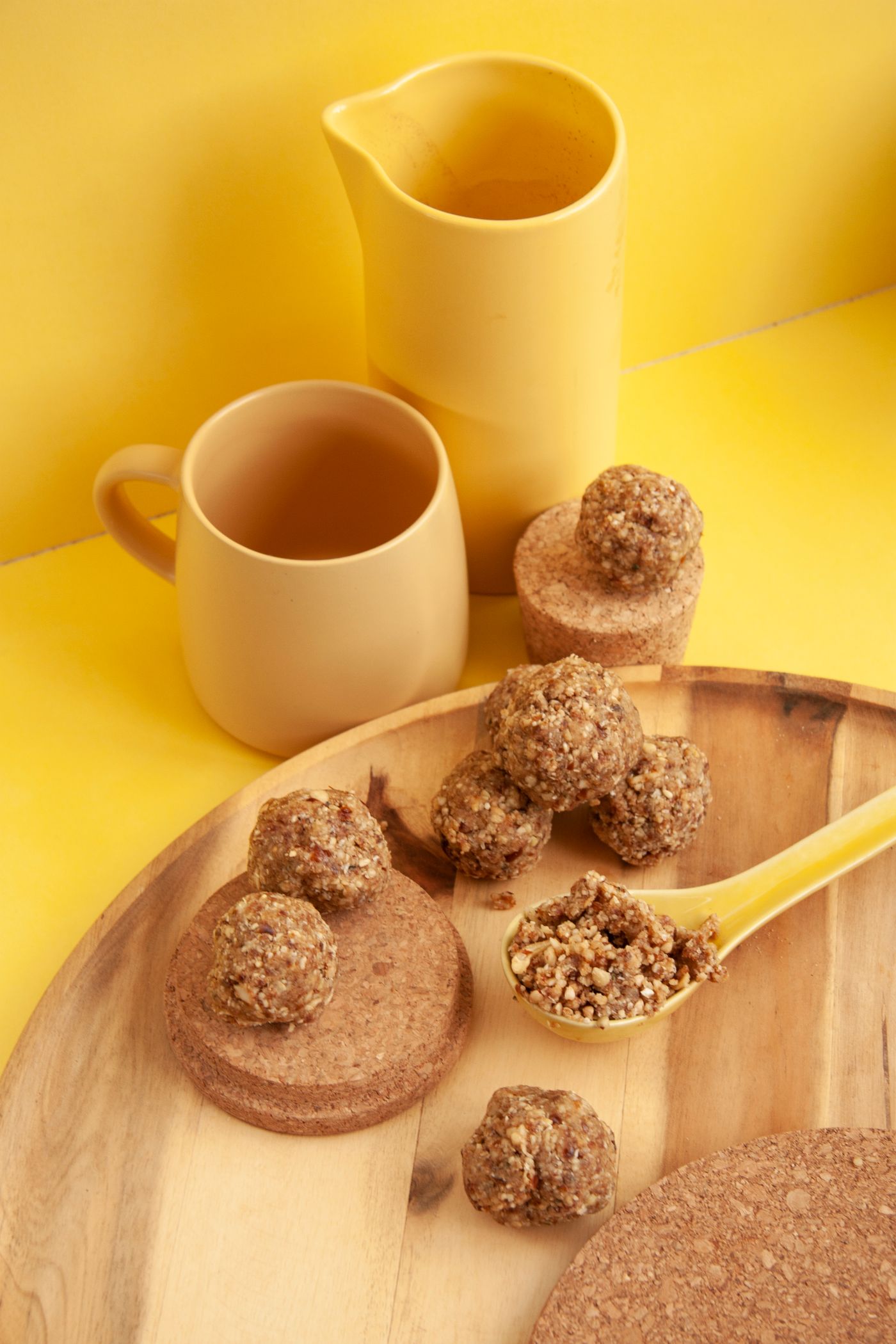
These oat bites set in the refrigerator rather than the oven. Their structure comes from rolled oats held together by smooth peanut butter and honey, with a little water available only if needed. The recipe makes sixteen small balls and includes a separate 20 g portion of finely ground rolled oats for coating. Keeping those two oat quantities distinct helps the mixture hold together without becoming unnecessarily dry.
Peanut butter oat bites makes 16 servings, with 35 min estimated total time. View the standalone recipe page.
Make the binder uniform before adding oats
Stir the half cup of smooth peanut butter with the quarter cup of honey and half teaspoon of vanilla until evenly combined. If oil has separated in the peanut-butter jar, mix the jar thoroughly before measuring so this batch does not receive only the oily top or dry bottom.
Use the specified smooth peanut butter rather than assuming every peanut product has the same consistency. Scrape the bowl as you stir the binder. A streak of unmixed honey can leave one part sticky while a pocket of dense peanut butter leaves another harder to combine with the oats.
Give the rolled oats and coating separate jobs
Mix the one and a half cups of rolled oats into the binder along with the quarter cup of mini chocolate chips. Mini chips distribute easily through small balls; make sure they are not all sitting at the bottom of the mixing bowl.
Keep the 20 g finely ground rolled oats aside for the final coating. They are not an extra dry ingredient to stir into the center. Use oats labeled as suitable for no-cook use and follow package guidance. Do not replace the coating with raw all-purpose flour; this recipe has no baking step to cook it.
Add water only after a squeeze test
Press a small amount of the mixed oats in your hand. If it holds together when gently squeezed, there is no need to pour in water just because it appears in the ingredient list. Loose flakes around a cohesive center are different from a mixture that crumbles completely.
If needed, add water a teaspoon at a time, mixing thoroughly between additions, within the listed one-to-two-tablespoon allowance. Small additions let you stop as soon as the mixture binds. Dumping in all the water can create a soft, sticky mass that is difficult to roll and encourages unnecessary extra dry ingredients.
Respect the twenty-minute chill
Cover and refrigerate the mixture for twenty minutes before shaping. That pause is included in the thirty-five-minute total, with about fifteen minutes of active preparation. It gives the mixture time to firm up before you decide that it is too soft to handle.
Divide it into sixteen roughly equal portions, pressing each together before rolling between your palms. Compacting a portion first works better than trying to roll a loose handful of flakes immediately. If your hands become heavily coated, clean and dry them so the next portions release more easily without adding more ingredients.
Coat lightly and keep refrigerated
Roll each ball through a little of the ground oats, using a light coating rather than burying it. The outside should become less sticky while still letting the peanut-butter mixture hold its shape. Shake off loose excess into the coating dish instead of packing it thickly around the ball.
Store the bites covered in the refrigerator, as the card directs. For a cautious home-storage plan, make only what you expect to use within three to four days and keep them cold during transport. Added water and handling mean you should not assume the finished mixture stores like unopened peanut butter or dry oats.
Common questions
Why do my oat bites fall apart?
First combine the binder thoroughly, then squeeze a sample. If it is genuinely crumbly, use the recipe’s water a teaspoon at a time, mix well, and complete the chill before rolling.
Do all the ground oats go into the mixture?
No. The separate 20 g ground-oat amount is a light coating for the shaped balls. Mixing it into the center adds dry material where the recipe does not call for it.
Technique & food-safety references
These primary references support the technique, safety and storage guidance. The recipe and cooking explanations are original Recipe Pinboard content.