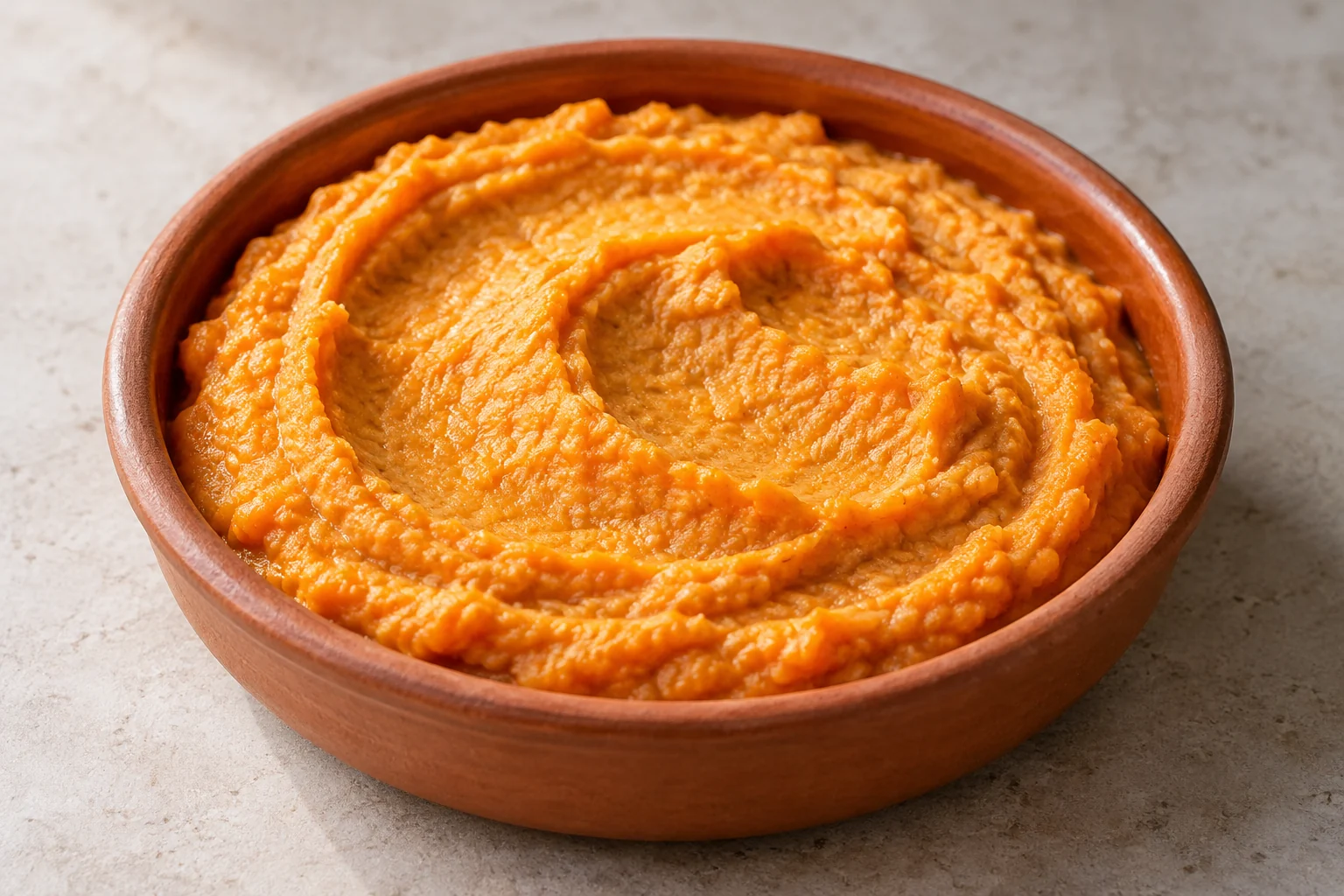
White beans make this carrot spread substantial enough to sit on a spoon, while roasting supplies a sweeter, deeper carrot flavor than raw blending would. The important decisions are when the carrots are truly soft and how much liquid the drained beans carry. Neither step requires cream or a long list of seasonings; the card uses lemon, garlic and a little cumin.
Roasted carrot & white bean spread makes 8 servings, with 1 hr 10 min estimated total time. View the standalone recipe page.
Cut carrots for softness as well as color
Aim for slices about 8 mm thick and avoid leaving a few unusually chunky ends. Thick pieces can look roasted at the edges while remaining firm in the middle, which produces orange grit in the finished spread. Toss thoroughly with the measured oil and cumin, and spread the pieces out. Turn after twenty minutes so the second surface receives heat. Before removing the tray, press a thick slice with a fork: it should collapse readily. A knife merely piercing it is a less useful test for a puree.
Add garlic later to prevent bitterness
Small peeled garlic cloves cook faster than carrot slices, especially on an exposed metal tray. Adding them at the first turn lets them soften without spending the full roasting period in the oven. Nestle the cloves beside the carrots rather than isolating them on a bare hot corner. They should be tender and lightly colored, not hard and dark. Scrape the tray oil into the mixing bowl with the vegetables; it is part of the measured recipe and carries some of the toasted cumin flavor.
Drain the beans consistently
The 240 g quantity is the weight of drained, rinsed beans, not the weight printed on an unopened can. Let the beans drain in a sieve before weighing them. The liquid clinging to very wet beans can loosen the spread more than expected and make its seasoning seem diluted. Plain cannellini beans are the intended ingredient. A can containing a tomato sauce, bacon or a flavored dressing would change the recipe substantially, and its label would need a fresh dietary review. Keep those products out of this simple blend.
Blend after cooling, then scrape and repeat
The ten-minute cooling period is included in the elapsed time. It also makes handling the roasted vegetables easier. Follow your processor manufacturer’s temperature instructions and never seal hot contents in a personal blender. Process the beans, carrots and stated liquid, stop the motor, scrape the walls and process again. Material can ride above the blade and remain coarse even when the center looks smooth. A small amount of bean-skin texture is normal. For a particularly smooth result, patience with scraping is more helpful than automatically doubling the water.
Plan for a thicker chilled spread
Beans can make the mixture feel firmer after refrigeration. Stir the cold spread before deciding it needs adjustment. If serving as a looser dip, thin only the portion being served with a little water and record any other additions separately. Divide the whole recipe into eight equal portions for the nutrition panel. Refrigerate promptly in shallow covered containers at 40°F (4°C) or below, and use within three to four days. Lemon juice adds brightness but does not turn cooked beans and vegetables into a shelf-stable food.
Common questions
Why are there hard orange bits after processing?
The carrots were probably not fully tender, or larger pieces escaped the blade. Roast to the fork-collapse stage and scrape the processor walls. More water may circulate the blend, but it cannot reliably erase undercooked carrot texture.
Can I replace cannellini beans with chickpeas?
Chickpeas make a different, often coarser spread with a different nutrient profile. Use cannellini for the published quantities and estimate. If experimenting with a substitution, keep the same drained weight as a starting point and treat it as a separate variation.
Technique & food-safety references
These primary references support the technique, safety and storage guidance. The recipe and cooking explanations are original Recipe Pinboard content.