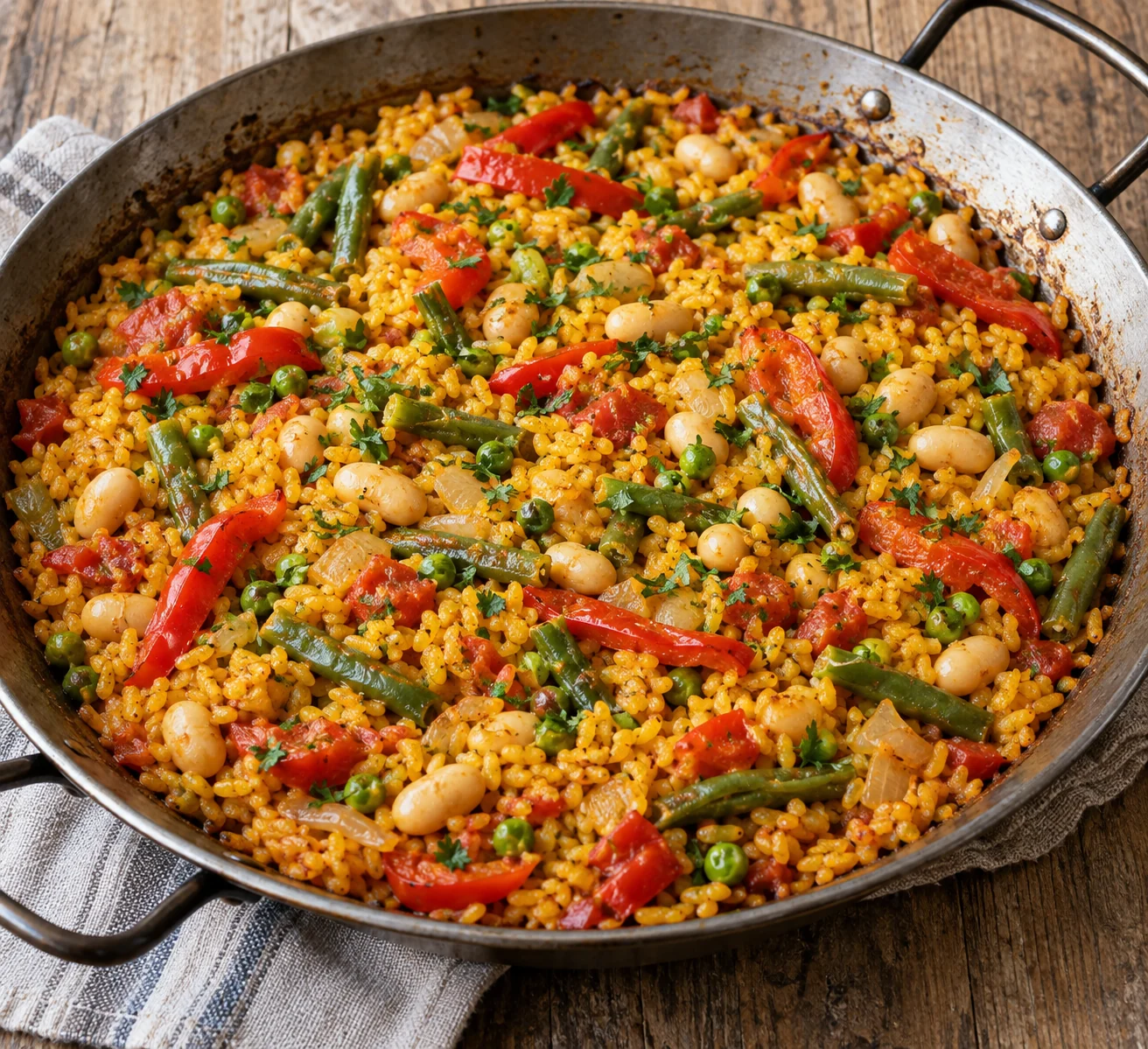
This vegetable version uses a shallow pan of saffron rice with peppers, green beans, peas and cannellini beans. The method depends on absorption and evaporation rather than draining a pot of cooked rice. A wide pan helps form a relatively shallow layer, but it still needs to suit the burner beneath it. The card makes four portions and includes a covered rest after cooking. It is an original vegetable preparation, with practical home-stove guidance rather than a claim that one formula represents every regional paella.
Saffron vegetable paella makes 4 servings, with 1 hr 25 min estimated total time. View the standalone recipe page.
Match the pan to the heat source
Use the specified twelve-inch shallow skillet rather than a deep saucepan or an oversized party pan. A narrow burner under a much wider pan can leave the outer rice behind while the center dries. Rotate the pan carefully during cooking if one area bubbles more strongly. Before beginning, make sure the pan is stable and has enough capacity for the measured rice, vegetables and water. Scaling the recipe up inside the same skillet changes the layer depth and evaporation; making separate batches is easier to control.
Start with the correct dry rice
The weight in the card is dry, unenriched short-grain white rice. Cooked rice cannot replace it gram for gram, and a different grain style may need a different water amount or time. Enriched rice also changes the recorded food profile, even when it looks similar in the bag. Keep the saffron steeping water because it contains part of the measured liquid and flavor. Canned white beans are weighed after draining and rinsing; their packing liquid is not an invisible addition to the pan.
Concentrate the tomato base before adding liquid
Cook the onion, pepper and green beans first, then briefly add garlic and paprika before the chopped tomato. Retain all tomato juices, allowing the mixture to thicken through cooking rather than draining them off. This step makes the flavor less watery before the larger water addition. Stir the dry rice through the base, then add the saffron water and remaining hot water. Level the ingredients so one side does not contain a heap of rice while the other holds mostly vegetables.
Let the rice cook without constant stirring
After leveling, allow the rice to simmer without repeated stirring. Watch the pattern of bubbles and the amount of visible liquid instead. Add the peas at the specified later stage so they warm through without spending the entire cooking period in the pan. If liquid disappears while the grain centers remain firm, use the small measured additions of boiling water described in the card. Plain water does not add nutrients, but extra oil or stock would change the formulation and should not be treated as equivalent adjustments.
Finish tender rice before seeking a toasted base
Tender grain centers matter more than trying to force a dramatic crust. Lower the heat if a scorched smell develops, and do not keep cooking simply because one patch has not browned. After the covered rest, serve the whole pan in four portions, including lightly toasted rice that lifts easily. Black burnt patches are not a desirable seasoning. Move leftovers into shallow containers promptly; a large warm skillet is an inconvenient storage vessel and can delay cooling. Reheat leftovers thoroughly rather than merely taking the refrigerator chill off.
Common questions
Why is the rice tender in the center but hard at the edge?
That pattern often points to uneven heat or an overly large pan for the burner. Rotate the specified pan during cooking and check several areas. Small hot-water additions can help dry areas finish, but they do not correct an unsuitable pan-and-burner pairing.
Should I rinse or drain the cooked rice?
There is no draining stage in this absorption recipe. The measured liquid becomes part of the dish or evaporates. Use the dry rice specified and follow the card rather than cooking it separately and adding it at the end.
Technique & food-safety references
These primary references support the technique, safety and storage guidance. The recipe and cooking explanations are original Recipe Pinboard content.


