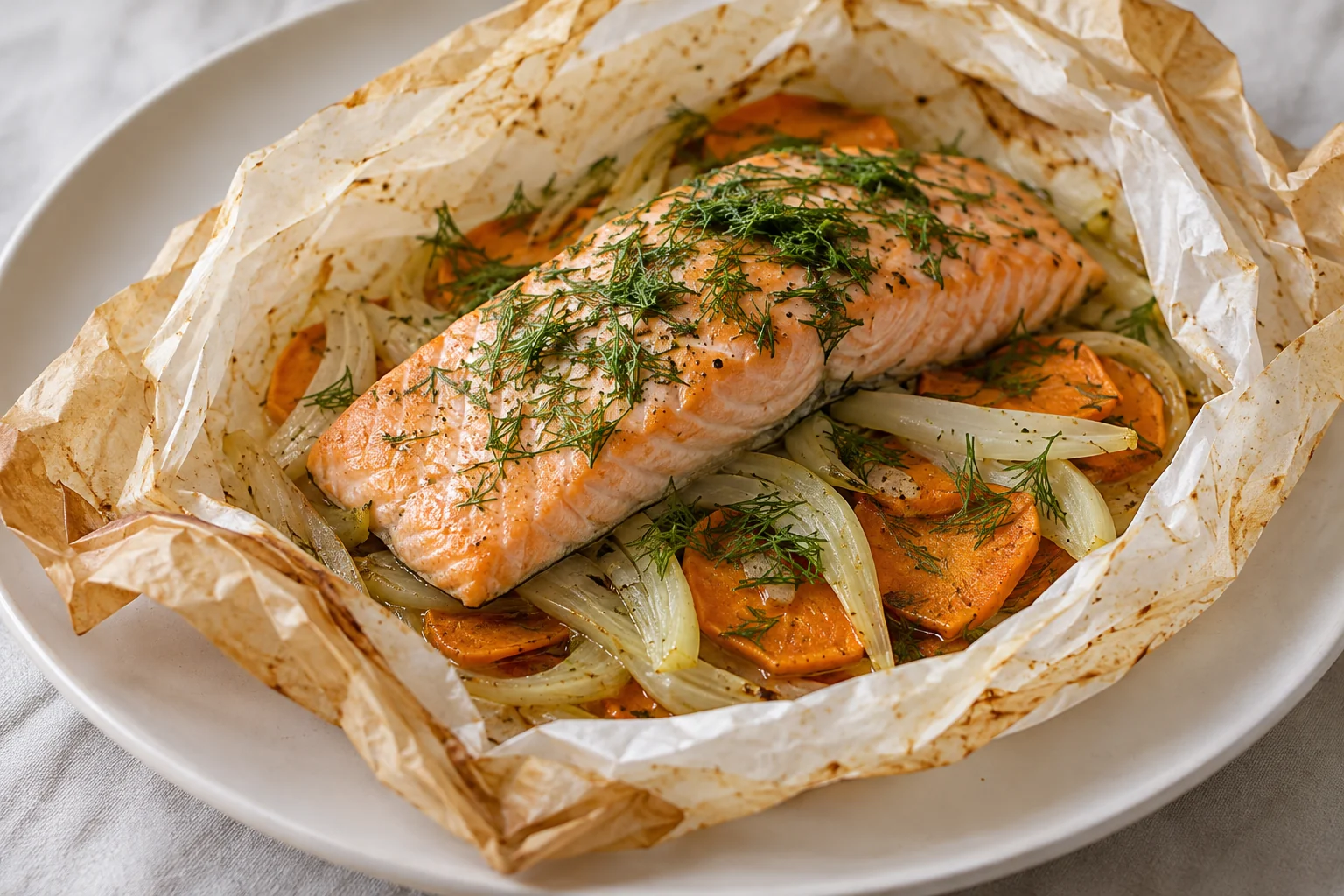
Salmon cooks much faster than a thick slice of sweet potato. This recipe solves that mismatch before sealing the parchment: thin vegetables receive a short covered steam first. The packet then finishes the vegetables while gently cooking the fish, and its juices become part of the serving rather than being discarded.
Salmon, sweet potato & fennel packets makes 4 servings, with 55 min estimated total time. View the standalone recipe page.
Cut the vegetables to an even thickness
Aim for sweet potato rounds about 1/8 inch (3 mm) thick. Large changes in thickness mean some slices remain firm while others collapse. A sharp knife is enough; if using a mandoline, use its hand guard. Slice the fennel thinly across the bulb and remove the tough base. The listed weights are after peeling and trimming. Whole untrimmed produce weights include material that never reaches the plate and cannot define the recipe quantities.
Pre-steam until almost tender
Use the measured water and a lidded skillet to soften the vegetables without adding uncounted oil. Stir once so the slices nearest the bottom do not receive all the heat. They should bend, and a knife should enter with slight resistance, before the fish is added. If they are still rigid, continue this stage instead of hoping a longer salmon bake will solve both problems. Divide any remaining vegetable liquid among the packets rather than pouring it away.
Build parcels that can hold steam
Use generous parchment sheets on rimmed trays, leaving enough space around the food for repeated folds. Divide the vegetables into four low mounds, then add equal fish portions and seasonings. A tall heap insulates its center. Crimp the edges tightly so the enclosure retains moisture, but leave room above the fish. Follow the parchment manufacturer’s oven-use limits, keep it away from heating elements, and do not place it under a broiler.
Check temperature without relying on the packet
Puffed parchment and a pleasant smell show that the packet is hot, not that the fish has reached a safe temperature. Open a fold carefully away from your face and insert a thermometer into the thickest part of the salmon. It must reach 145°F (63°C). Check the vegetables too. If either needs more time, close the parcel again and return it to the oven. Fillet thickness and starting temperature can move the finish beyond the stated range.
Serve and store the whole portion
One packet is one portion, including its sweet potato, fennel and juices. The image is a dish illustration, not a temperature test or a measured serving. Open parchment carefully because escaping steam can burn. For leftovers, transfer food out of the packet into a shallow container and refrigerate within two hours. Use within three to four days and reheat to 165°F (74°C). Do not assume a tightly folded packet makes cooked fish shelf-stable.
Common questions
Can I put raw thick sweet potato pieces under the fish?
Not with this timing. They may remain hard after the salmon is safely cooked. Keep the slices thin and complete the pre-steaming stage so both components can finish together.
Can I use skin-on salmon?
The published mass and nutrition use skinless edible fish. Skin changes the amount of edible flesh in a purchased portion and can affect eating texture inside a moist packet. Remove it and weigh the flesh, or recalculate the variation.
Technique & food-safety references
These primary references support the technique, safety and storage guidance. The recipe and cooking explanations are original Recipe Pinboard content.