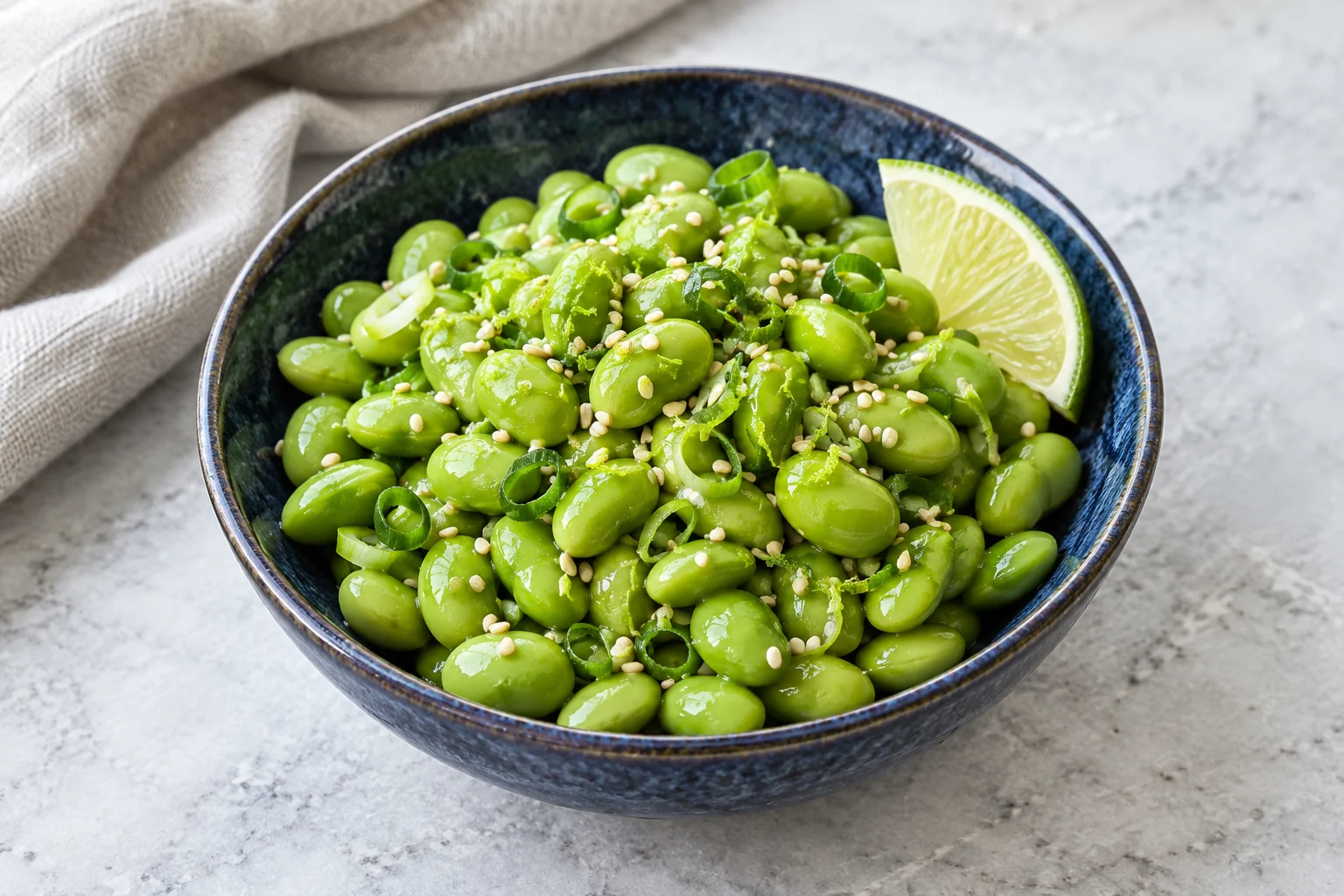
This snack uses shelled frozen edamame, so every green bean in the bowl is ready to eat after cooking. The key sequence is short but deliberate: cook according to the packet, drain thoroughly, allow a minute of steam to escape and add the measured dressing. Four snack bowls share 400 g edamame, toasted sesame and scallions, with one lime wedge on each.
Sesame-lime edamame with scallions makes 4 servings, with 20 min estimated total time. View the standalone recipe page.
Check the product before setting the timer
Use plain frozen shelled edamame, not whole pods or a pre-seasoned vegetable blend. The 400 g refers to the beans themselves. Whole pods would include weight that is not part of the edible serving and would change preparation. Read the packet's cooking instructions before opening it so the appropriate timing is clear when the water reaches a boil.
Bring the listed 1000 g water to a boil in a medium saucepan with room above the waterline. Keep the frozen beans ready to add without leaning over the escaping steam. The twenty-minute total includes heating the water and preparing the finish; the ten minutes of active work does not mean the beans are ready after merely thawing on the counter.
Cook from frozen according to the packet
Add the edamame to the boiling water and follow the package time, usually four to six minutes for the recipe's stated product type. Adding frozen beans can temporarily reduce the bubbling, so attend to the packet's directions about timing. Keep them cooking until tender and hot throughout rather than removing them as soon as their icy exterior disappears.
This method does not serve edamame simply thawed. Product preparation can differ, which is why the package instruction is the final timing reference within the recipe. Lift a bean carefully with a spoon to assess tenderness without reaching into the pan. The finished beans should be pleasant to bite, not left hard in the center or boiled until they fall apart.
Toast sesame during the water-heating interval
Put the 10 g white sesame seeds in a small dry skillet over medium-low heat. Stir frequently for two to three minutes, looking for pale gold and a toasted aroma. The seeds are small and continue heating quickly, so resist leaving them unattended while doing other preparation. Dark brown is beyond the intended light toast.
Transfer the seeds to a plate when ready. Switching off the burner without emptying a hot skillet leaves residual heat beneath them. Keep the toasted seeds dry while the edamame cooks; they will be folded in at the end. The measured toasted sesame oil is a separate dressing ingredient and should not be used as frying oil for this seed-toasting stage.
Drain before measuring the final texture
Pour the cooked beans into a colander carefully, keeping your face and hands clear of steam. Shake gently to release trapped cooking water, then let excess steam escape for one minute. A wet colanderful would dilute the small dressing quantity and leave lime-flavored water underneath otherwise plain beans. This brief pause improves coating without turning into a long cooling hold.
Toss the warm beans with 8 g sesame oil, 15 g lime juice, the grated zest and salt. Use a bowl large enough to turn the beans from the bottom rather than only seasoning their top layer. Grate the colored lime surface finely, avoiding thick white pith. The dressing should give a light sheen, not a deep pool around the beans.
Fold in the finish and serve four small bowls
Add the thinly sliced scallions and toasted seeds, folding until they are distributed. Divide the beans among four snack bowls and scatter any seeds left in the mixing bowl across the servings. Cut the separate small lime into four wedges and add one to each. These wedges are in addition to the measured lime juice already used in the dressing.
Serve warm. For leftovers, use a covered shallow container and refrigerate within two hours, or one hour when the surrounding temperature exceeds 90°F/32°C. Lime juice does not turn cooked beans into a shelf-stable snack. If planning different serving times, keep later portions refrigerated rather than leaving the whole dressed batch on the counter for repeated grazing.
Common questions
Can I just thaw the frozen edamame and dress it?
No. This recipe requires cooking according to the packet until the beans are tender and hot throughout. Thawing alone does not complete that instruction.
Why does the lime dressing taste weak?
Cooking water left on the beans can dilute the measured dressing. Drain thoroughly, let steam escape for one minute and toss from the bottom of the bowl before dividing the servings.
Technique & food-safety references
These primary references support the technique, safety and storage guidance. The recipe and cooking explanations are original Recipe Pinboard content.