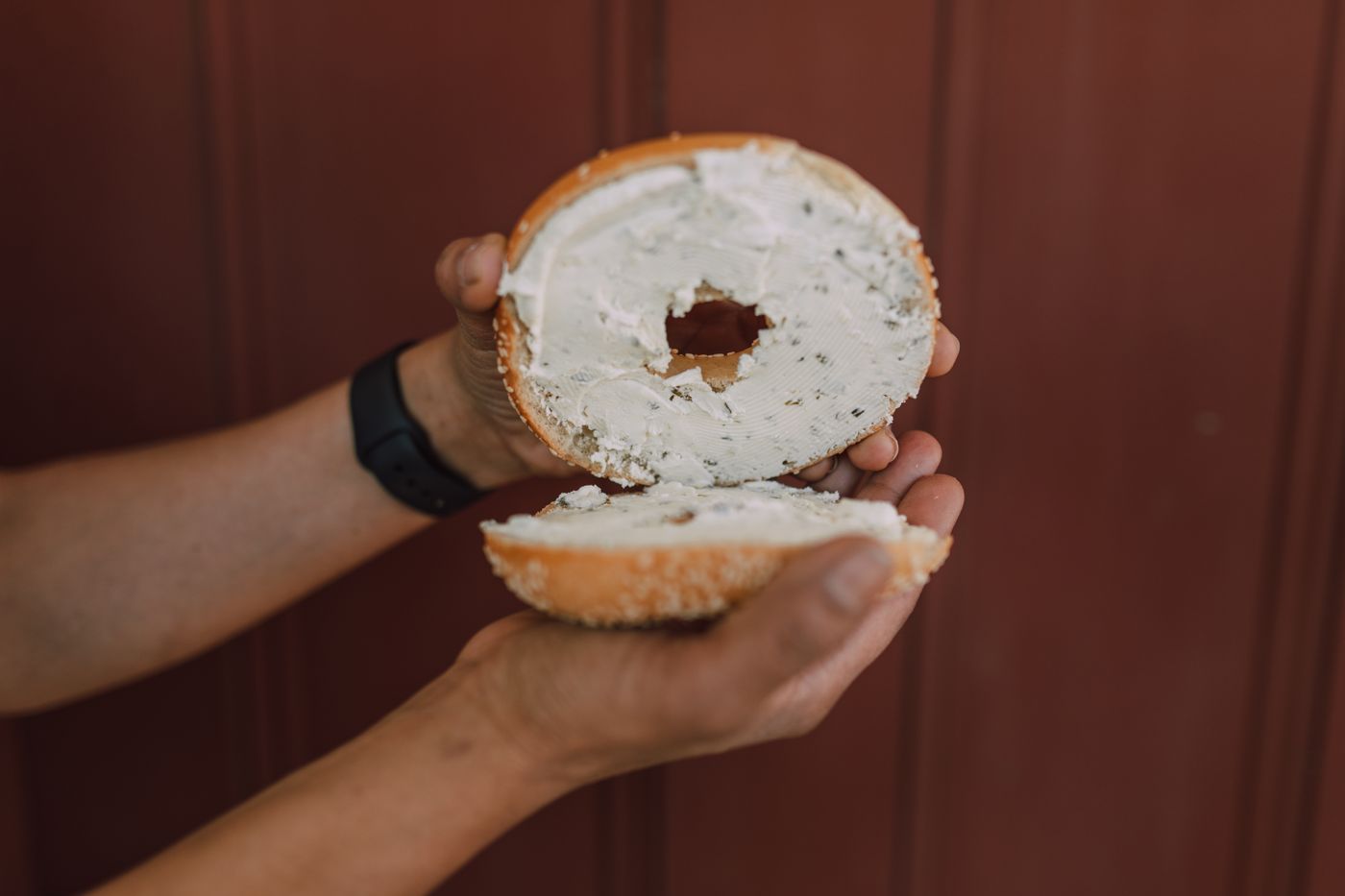
A good cream-cheese bagel depends on the contrast between a warm, lightly crisp bagel and a cool, spreadable topping. This ten-minute recipe serves two using two plain bagels and 100 g plain cream cheese. The only other listed ingredient is 1 tsp water, reserved for refreshing a slightly stale bagel. There is no dough to mix or filling to cook, so choose the heating route that suits the bread you already have.
Toasted bagel with cream cheese makes 2 servings, with 10 min estimated total time. View the standalone recipe page.
Check the bagels and divide the cream cheese
Start with bagels that are fresh enough to eat. A slightly firm, day-old bagel can benefit from warming, but visible mold or spoilage means discarding it rather than trimming and toasting it. Heat can improve texture; it is not a rescue method for spoiled bread. Keep the cream cheese refrigerated while preparing your board, knife and toaster or oven.
Measure 100 g cream cheese for both bagels, which gives each person 50 g. That portion can be spread across both cut halves rather than forming a thick lump in the center. Plain cream cheese is the listed choice. Whipped or reduced-fat products have different textures, so do not assume their volume or spreading behavior will match the same-looking spoonful.
Split through the middle with stable support
Place the bagel on a stable cutting board and use a serrated knife to divide it horizontally into two reasonably even halves. Keep your fingers out of the knife’s path and avoid sawing toward your palm. An uneven cut leaves a thin side that browns rapidly and a thick side whose center may still feel cold.
Inspect the split surface before heating. A few loose crumbs are normal, but remove large detached pieces that could fall onto a heating element. For a toaster oven, position the halves cut-side up. If using a slot toaster, follow its bagel-setting and orientation instructions instead of trying to force a large half into a narrow opening.
Toast lightly, watching the edges
Toast the bagels until warm with lightly crisp cut surfaces, about three to five minutes. The exact setting depends on the appliance and the bagel’s thickness, so start watching before the end of the range. A pale golden surface with a warm center is the target; a deeply dried bagel becomes difficult to bite once it cools.
Toasting is especially useful for a bagel that was baked earlier rather than moments ago, a point also made in King Arthur’s bagel guidance. Do not treat a long toast as a way to guarantee freshness. If the thin edges become dark while the interior stays cold, choose gentler heating for the next batch rather than chasing uniform warmth with more browning.
Use the water only for the stale-bagel route
For a slightly stale bagel, the recipe provides a different approach: lightly moisten its outside using the listed teaspoon of water, then warm it in a 350°F (175°C) oven for about five minutes. Keep the application light. The purpose is to help refresh the exterior during warming, not to soak the crumb or rinse the bagel under a tap.
Treat this as an alternative selected for the bread’s condition, not a requirement to wet and heat every fresh bagel twice. A very dry bagel may still be firmer than a fresh one after warming. Adding more cream cheese can mask that dryness only briefly, and it would change the measured topping amount rather than fix the underlying bread texture.
Pause, spread and serve while the contrast lasts
Let the heated bagels stand for one minute before spreading. That short pause reduces the chance of the cream cheese melting immediately into the surface. Spread with gentle strokes from the middle toward the edges, supporting each half on the plate. Pressing hard with a cold, solid lump can tear the crumb and leave bare patches.
Eat promptly. For taking breakfast elsewhere, pack the bagel and chilled cream cheese separately and assemble on arrival. Once cream cheese is spread on, keep leftovers refrigerated and follow its package storage directions; do not leave the assembled food out beyond two hours, or one hour above 90°F. An already topped bagel will soften in storage and is less suitable for re-toasting.
Common questions
Should I put butter under the cream cheese?
Butter is not included in this recipe and is unnecessary for the intended warm-bagel, cool-cream-cheese contrast. Use the full measured cream-cheese portion first. Adding butter would be an optional change to the ingredient list and nutrition, not a missing step.
Can I toast a frozen bagel the same way?
A frozen bagel needs additional warming time and may benefit from a toaster’s frozen setting. Follow the appliance instructions and avoid trying to cut a hard-frozen whole bagel. The recipe’s three-to-five-minute estimate assumes bagels that can already be split safely.
Technique & food-safety references
These primary references support the technique, safety and storage guidance. The recipe and cooking explanations are original Recipe Pinboard content.