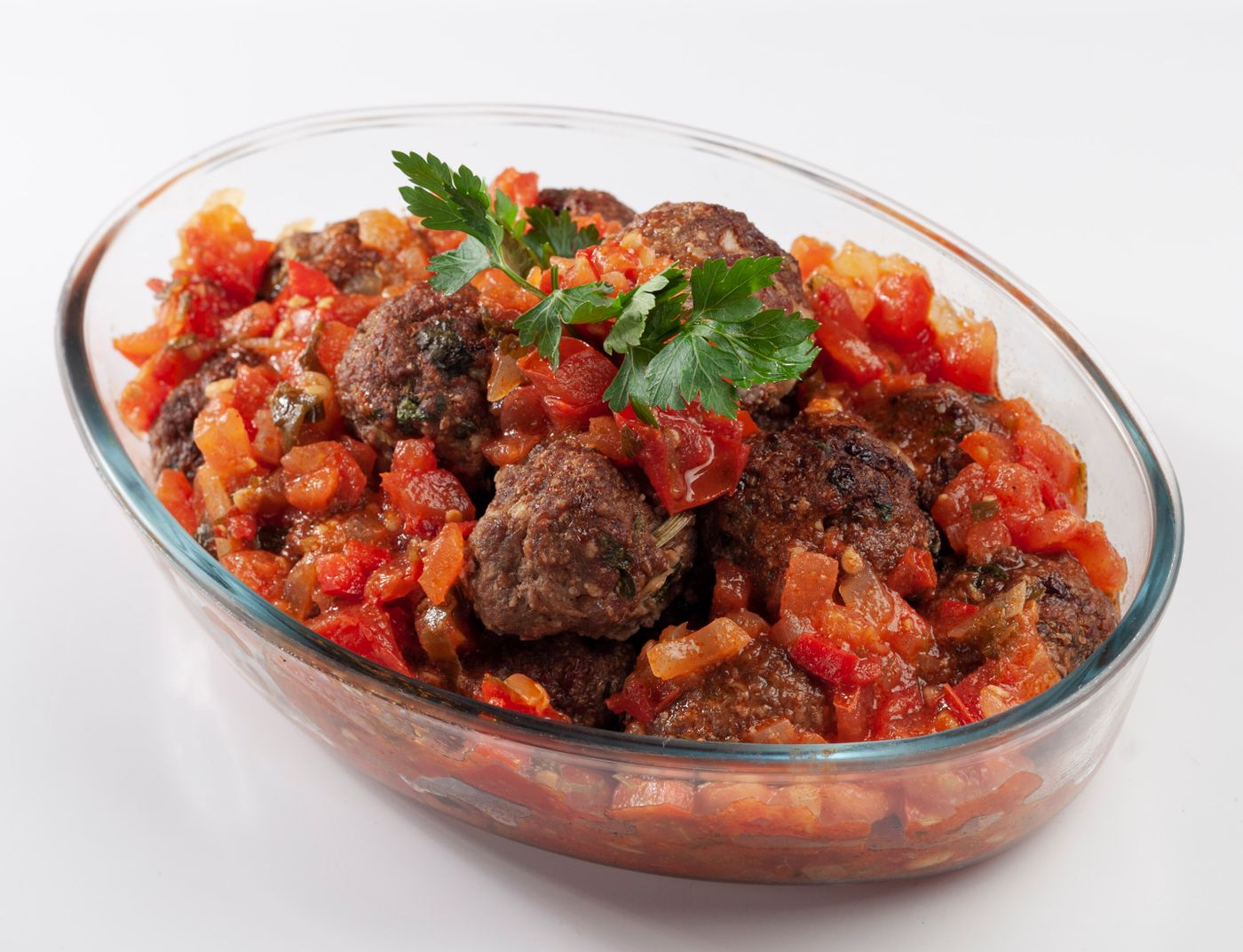
These meatballs are fully baked before their short tomato-sauce finish. The word braised in the title should not suggest a long simmer of raw meat: the card calls for a 425°F oven, a checked internal temperature, and then five minutes in sauce. Their tenderness depends on the milk-soaked breadcrumbs, restrained mixing and consistent portioning.
Tomato-braised beef meatballs makes 4 servings, with 45 min estimated total time. View the standalone recipe page.
Hydrate the breadcrumbs before adding beef
Give the half cup of plain breadcrumbs the full three-minute stand with the quarter cup of milk. Stir them together so there are no dry pockets hiding underneath. Preparing this mixture first lets the crumbs absorb the liquid before they are distributed through the pound of beef.
Add the egg, half the minced garlic, salt and pepper with the beef as directed. Mix only until the ingredients are distributed, using a light folding motion rather than kneading the mixture into a dense ball. There is no need to keep working it after the streaks of breadcrumb mixture disappear.
Make sixteen similar portions
Divide the mixture before rolling so the first meatballs do not use most of it. Halving the mixture repeatedly gives sixteen rough portions that can then be shaped with a gentle touch. Uniformity matters more than a perfectly polished sphere: the largest meatball controls how long the tray must remain in the oven.
Set the meatballs on the lined tray with some space between them. Use a lining suitable for the recipe’s 425°F (220°C) oven temperature. Crowding them together makes their edges harder to inspect and can leave neighboring surfaces wet while the exposed sides brown.
Let the sauce cook alongside the oven stage
Start the onion in olive oil while the meatballs bake. The onion gets five minutes before the remaining garlic enters for thirty seconds. Dice it small enough that the pieces can soften within this short preparation stage; large onion chunks will stay conspicuous in the finished sauce.
Add the whole contents of the diced-tomato can with oregano and simmer for fifteen minutes. The tomatoes are not listed as drained, so their juice belongs in the saucepan. Stir along the base occasionally and maintain a gentle simmer. This is a chunky sauce, and intact tomato pieces are consistent with the recipe.
Check centers before combining
Begin checking the meatballs during the fifteen-to-twenty-minute baking window. Insert a thermometer into the center of a larger meatball without touching the tray, and check more than one position on the sheet. The ground beef must reach 160°F (71°C); a browned exterior cannot confirm the temperature inside.
Transfer the cooked meatballs into the simmering sauce and let them finish there for five minutes. Move them gently with a spoon instead of vigorously stirring. The sauce stage coats and warms the meatballs together; extending it indefinitely is not necessary once the beef is safely cooked.
Finish with parsley and save sauce with each portion
Reserve a few small parsley leaves and chop the rest of the recipe’s two tablespoons. Add the chopped parsley after the short sauce finish and scatter the reserved leaves over the portions. Divide the sixteen meatballs into four portions, making sure each gets some sauce. No pasta, bread or other accompaniment is included in the stated recipe.
Pack leftovers with sauce in shallow containers and refrigerate promptly. Use within three to four days and reheat to 165°F at the center of the meatballs. Keeping sauce around them makes reheating easier to manage than warming bare meatballs; check the center even when the surrounding tomato sauce is bubbling.
Common questions
Should I bake or simmer the raw meatballs?
This particular method bakes them first until their centers reach 160°F, then gives them five minutes in tomato sauce. Simmering them raw would be a different cooking schedule.
Why are some meatballs dry and others still underdone?
Uneven portion sizes are a likely cause. Divide the mixture into sixteen similar portions before shaping, then check several larger centers rather than judging the entire tray by one small meatball.
Technique & food-safety references
These primary references support the technique, safety and storage guidance. The recipe and cooking explanations are original Recipe Pinboard content.