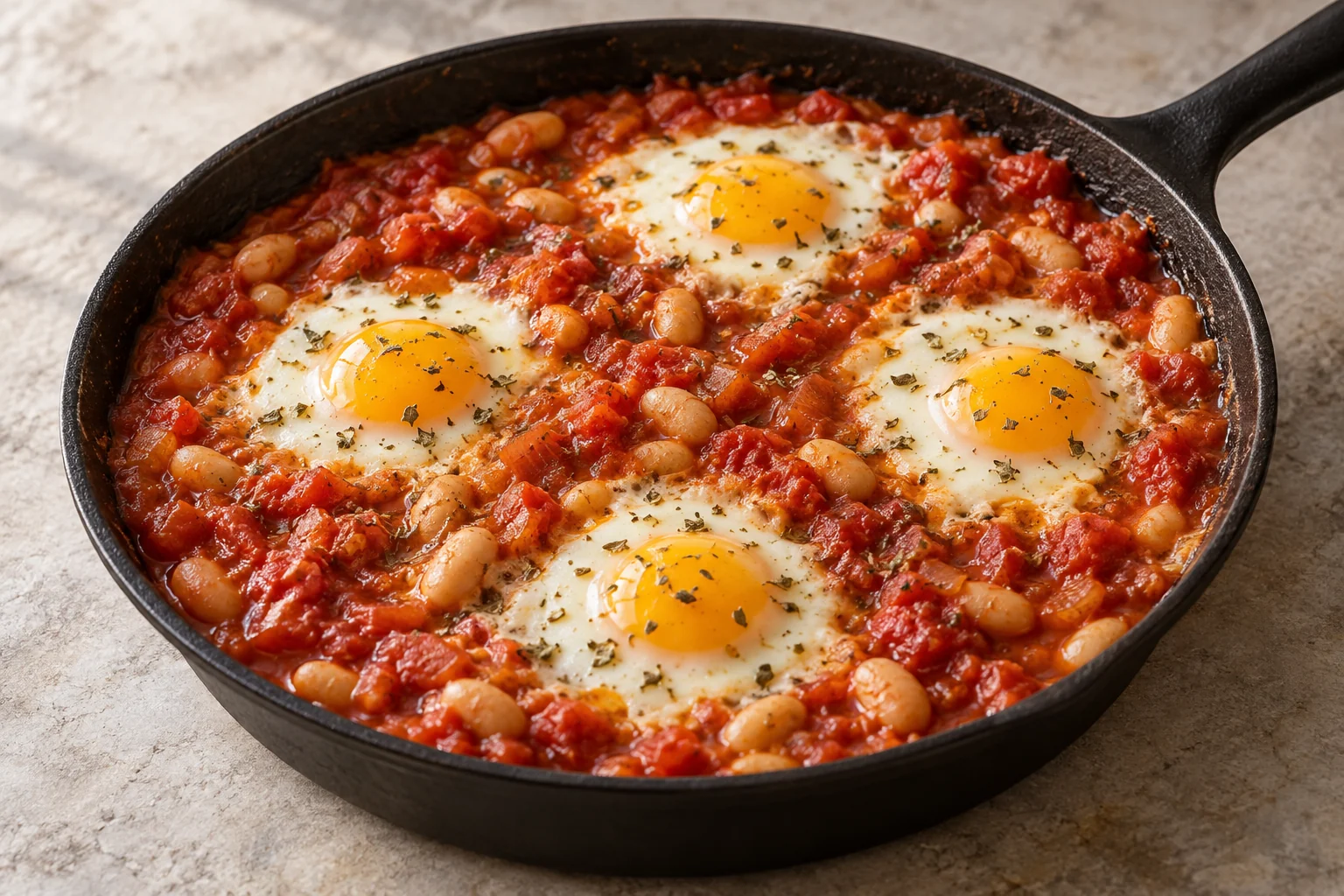
The tomato sauce must support the eggs rather than let them drift across a watery skillet. White beans add substance, and the eggs finish in the oven with firm whites and yolks. This is a measured four-portion dish: each portion gets one egg and a quarter of the sauce. Toast or other accompaniments are separate from the recipe card.
Tomato & white bean baked eggs makes 4 servings, with 50 min estimated total time. View the standalone recipe page.
Choose an ovenproof skillet
A ten-inch ovenproof skillet gives enough room for four eggs without spreading the sauce into an extremely thin layer. Confirm that its handle and lid, if used for another purpose, are suitable for the oven temperature. Keep a dry towel or oven mitt nearby and remember that the handle remains hot after the skillet returns to the counter. A deeper narrow pot would change the egg spacing and heating pattern. The specified pan makes it easier to distribute the beans and form stable wells.
Reduce tomatoes before adding eggs
Soften the onion first, then briefly stir in garlic and oregano before adding tomatoes. Simmer uncovered until the sauce is thick enough that a spoon can make a shallow depression. Tomatoes from different cans vary in juice, so look at consistency as well as elapsed time. A watery base can dilute the egg whites and make the final portions difficult to lift. Stir regularly to prevent the thickening sauce from catching on the bottom, especially near the skillet edges.
Heat the beans through first
The canned cannellini beans are drained and rinsed before weighing. Fold them through the reduced sauce and let them heat for the stated interval. Starting the eggs over cold beans makes the oven stage less predictable because the base must first regain heat. Keep most beans intact for texture, although a few broken ones naturally thicken the tomatoes. Spread them evenly before making the four wells so one portion does not receive mostly sauce and another mostly beans.
Place and check each egg
Crack eggs individually into a small cup before sliding them into their wells. This makes a stray shell easier to catch and avoids dropping all four into one area. Space the wells apart and keep the skillet level while moving it to the oven. Cook until both whites and yolks are firm, and check the egg dish reaches the stated temperature. A glossy transparent patch of white or a liquid yolk does not meet this recipe’s intended endpoint, even if the sauce is bubbling.
Serve equal shares of the complete dish
Use a broad spoon to lift each egg with its surrounding beans, then distribute the remaining sauce evenly. The edible egg mass is part of the calculation; eggs sold under the same size name can vary slightly, so weighing is the most direct way to reproduce it. This is vegetarian but not vegan because eggs are a central ingredient. Packaged beans, tomatoes and dried herbs still need label checks for the conditional dietary screens. Cool and refrigerate leftovers promptly and reheat them thoroughly.
Common questions
Why are the yolks done before all the whites?
Eggs may be sitting unevenly, with thick white pooled in a deep well. Make shallow evenly spaced wells and check each egg. Continue cooking until the slowest white is firm rather than serving a partially set egg.
Can I prepare the sauce ahead?
Yes, refrigerate the cooked sauce promptly and reheat it thoroughly before adding fresh eggs. Starting with a refrigerator-cold skillet of sauce would require a different oven schedule, so do not assume the original timing still applies.
Technique & food-safety references
These primary references support the technique, safety and storage guidance. The recipe and cooking explanations are original Recipe Pinboard content.


